
Best suited for
Community Groups, Companies, Families and Tour Groups.
Group Transport Dubai should be planned from the route outward. Start with the exact pickup point, passenger count, luggage volume, ready time and return rule, then choose a vehicle direction that can operate the movement without guesswork.
This page is written for community groups, companies, families and tour groups. It explains how shared passenger movement, route clarity and vehicle-size review affect the quote, how to compare group vans, shared minibuses and 35 seater buses, and how to send a complete request that is useful for sales, dispatch and passengers.
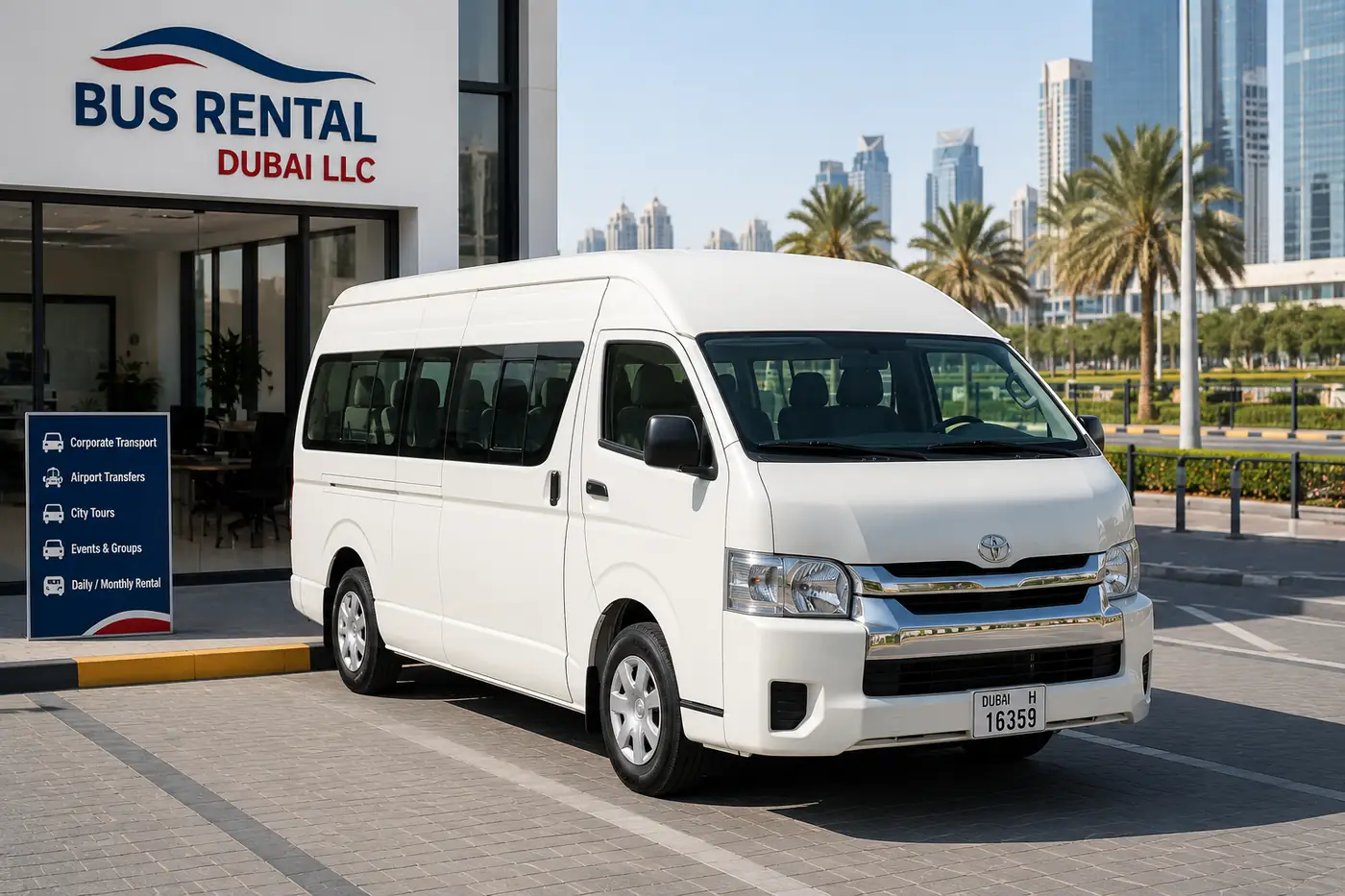
Route brief first. Is useful when the organizer wants everyone moving together with one instruction instead of separate cars. Confirm capacity, access, timing and return scope before comparing price.
Community Groups, Companies, Families and Tour Groups.
Shared Passenger Movement, Route Clarity and Vehicle-size Review.
Group Vans, Shared Minibuses and 35 Seater Buses.
Group Transport pickup access, destination, date, ready time, passengers, luggage, waiting and return scope.
The approval question for group transport is whether the selected vehicle can reach the right place, at the right time, with the right capacity and service standard. Dubai transport often fails when a request names only an area, because a tower, hotel, school, camp, airport or venue may have several possible stopping points.
Build the group transport request around movement reality. Confirm who is travelling, where passengers assemble, how much luggage or equipment is carried, whether everyone must travel together and whether the vehicle is needed after drop-off. This separates a simple transfer from a waiting, loop, full-day or contract movement.
For group transport, route pressure may involve hotel pickups, residential communities, event entrances, airport meeting points and intercity starts. Share the exact gate, lobby, terminal, tower name, site entrance, school gate, camp block or venue access note so the route can be quoted and operated on the same information.
Different buyers judge the group transport request differently. A procurement team wants a clean written scope; a hotel wants guest timing; a school wants supervised boarding; a site manager wants shift reliability. The content and quote should answer the real buyer concern instead of repeating only a keyword.
Community Groups using group transport need a written route brief before the vehicle is blocked for the date. The quote should show how passengers board and who controls route changes.
Companies should receive a written group Transport brief showing boarding instructions, route-change control, timing and coordinator responsibility before the vehicle is blocked.
Families using group transport benefit from timing buffers, access notes and one reachable coordinator. The quote should show how passengers board and who controls route changes.
Tour Groups using group transport need the return or waiting rule agreed before price comparison. The quote should show how passengers board and who controls route changes.
A strong group transport request describes the route in operational order: pickup access first, passenger ready time second, destination and return rule third. That sequence helps sales quote the correct scope and helps dispatch avoid last-minute calls.
For this service, the most useful context is hotel pickups, residential communities, event entrances and airport meeting points. These names guide planning, but they become driver instructions only when you add the exact gate, lobby, terminal, camp block, hotel driveway or venue access note.
The decision is not only whether group vans or shared minibuses can carry the group. The better decision is whether the chosen vehicle fits the boarding area, luggage volume, guest profile, travel distance and the time the vehicle must remain available.
Check whether the group transport pickup point allows the selected vehicle to stop safely without blocking traffic, security gates or hotel lanes.
Give group transport passengers one ready time and one coordinator, especially when the group is split across rooms, offices, camp blocks or venue entrances.
State clearly whether this group transport service is drop-only, return-later, standby, repeated shuttle, full-day movement or a monthly route.
Compare group transport quotes only when vehicle type, waiting time, return plan, parking and route stops are included on the same basis.
Passenger count starts the group transport vehicle conversation, but it should not finish it. The correct recommendation also checks luggage, standing instructions, route distance, access space, comfort expectations, parking limits and whether the vehicle should remain with the group.
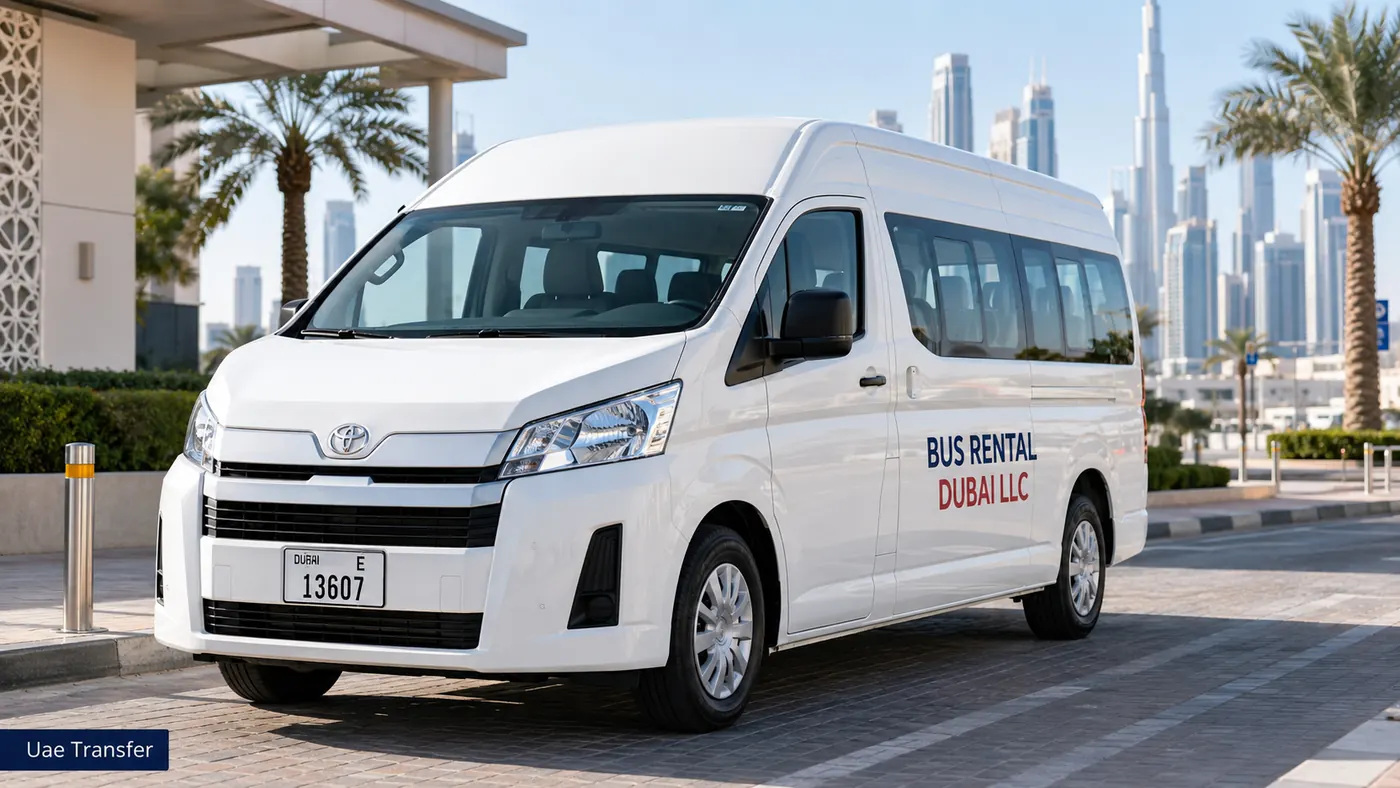
For group transport, review group vans when access and passenger count point to a compact but controlled movement. Confirm luggage, entrance width, parking space and the expected service image before approval.
For group transport, review shared minibuses when the route needs comfort, luggage space and steady boarding time. Confirm luggage, entrance width, parking space and the expected service image before approval.
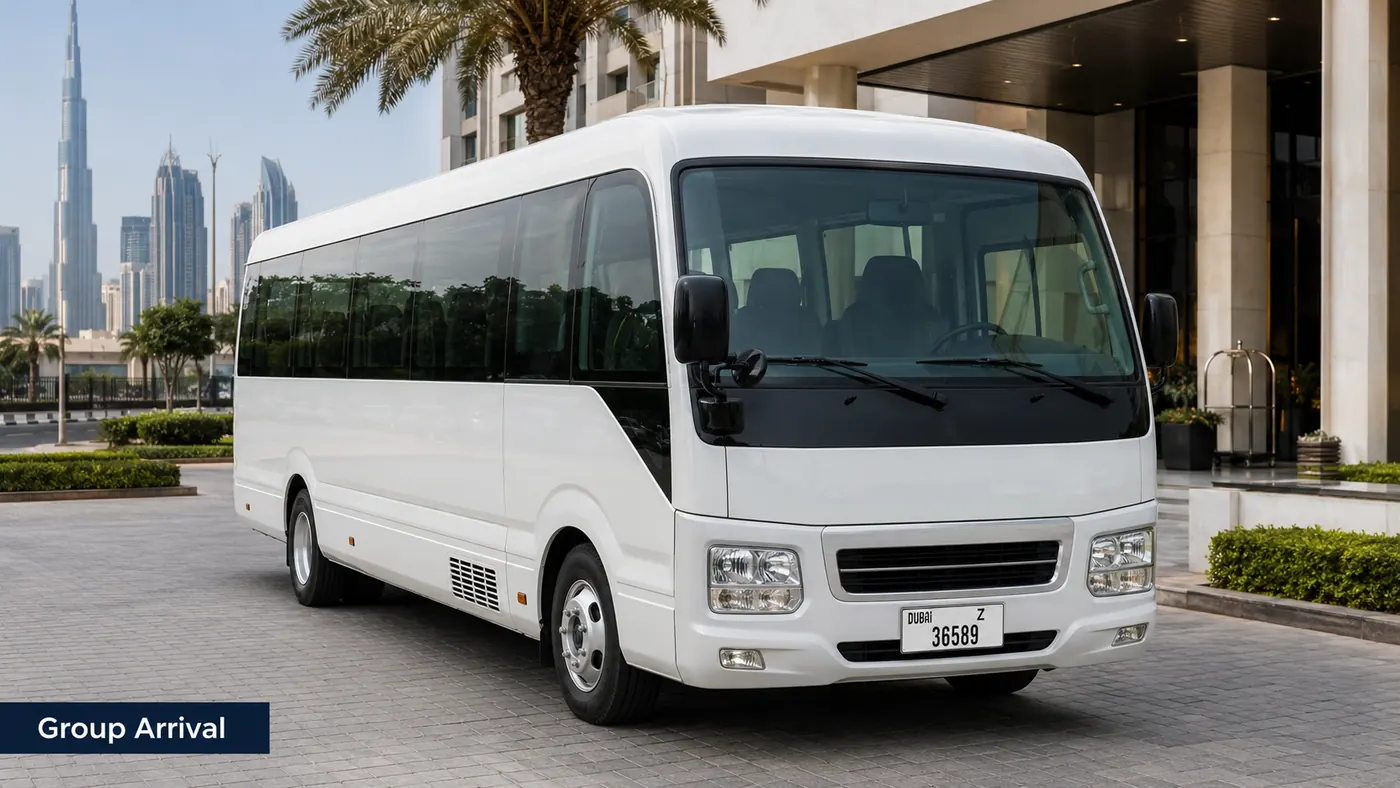
For group transport, review 35 seater buses when one vehicle is easier to manage than splitting the group. Confirm luggage, entrance width, parking space and the expected service image before approval.
For group transport, review 50–53 seater coaches when the booking depends on repeated timing or a stronger dispatch plan. Confirm luggage, entrance width, parking space and the expected service image before approval.
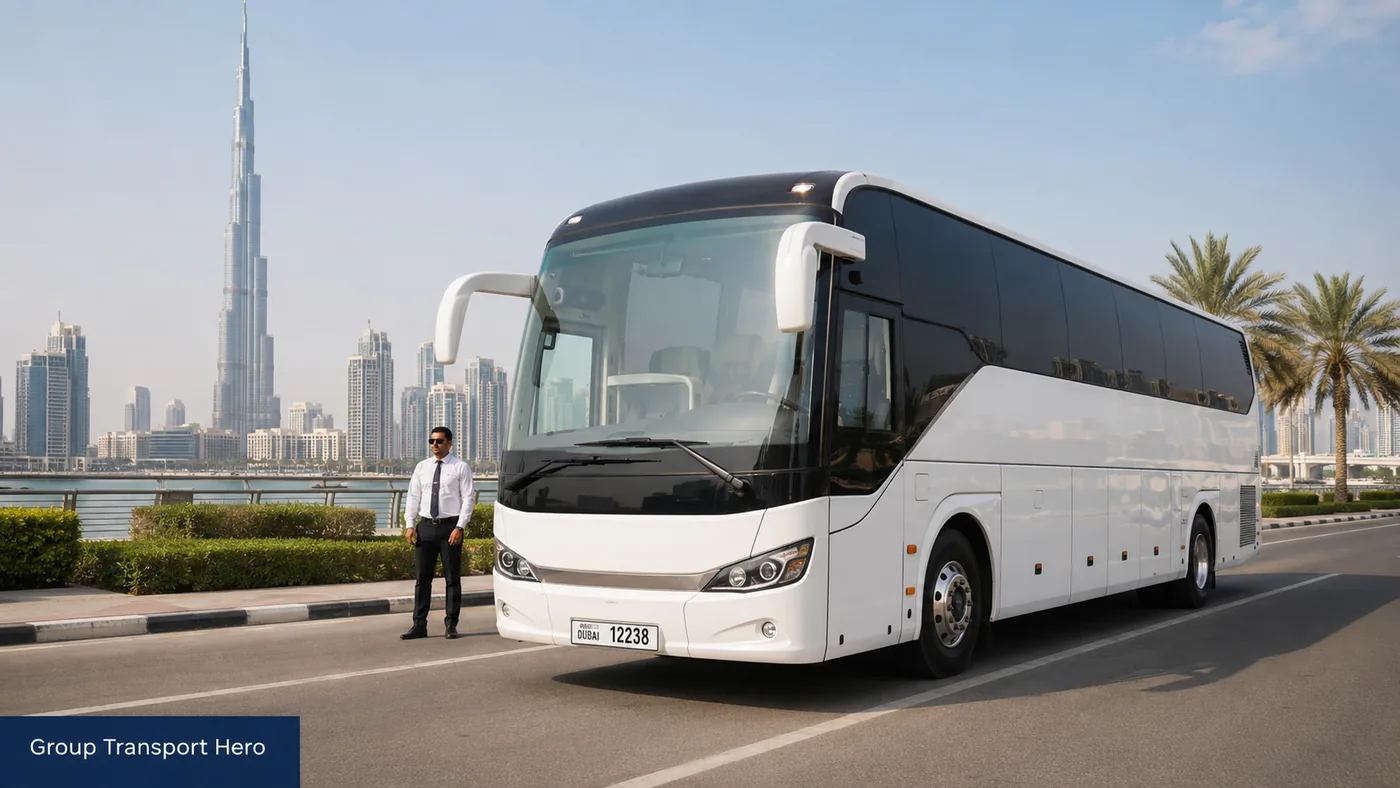
Write the group transport pickup instruction like dispatch will read it on the service day. Include the exact location name and the physical access point, then add any security gate, parking restriction, loading zone, terminal, hotel driveway or coordinator instruction.
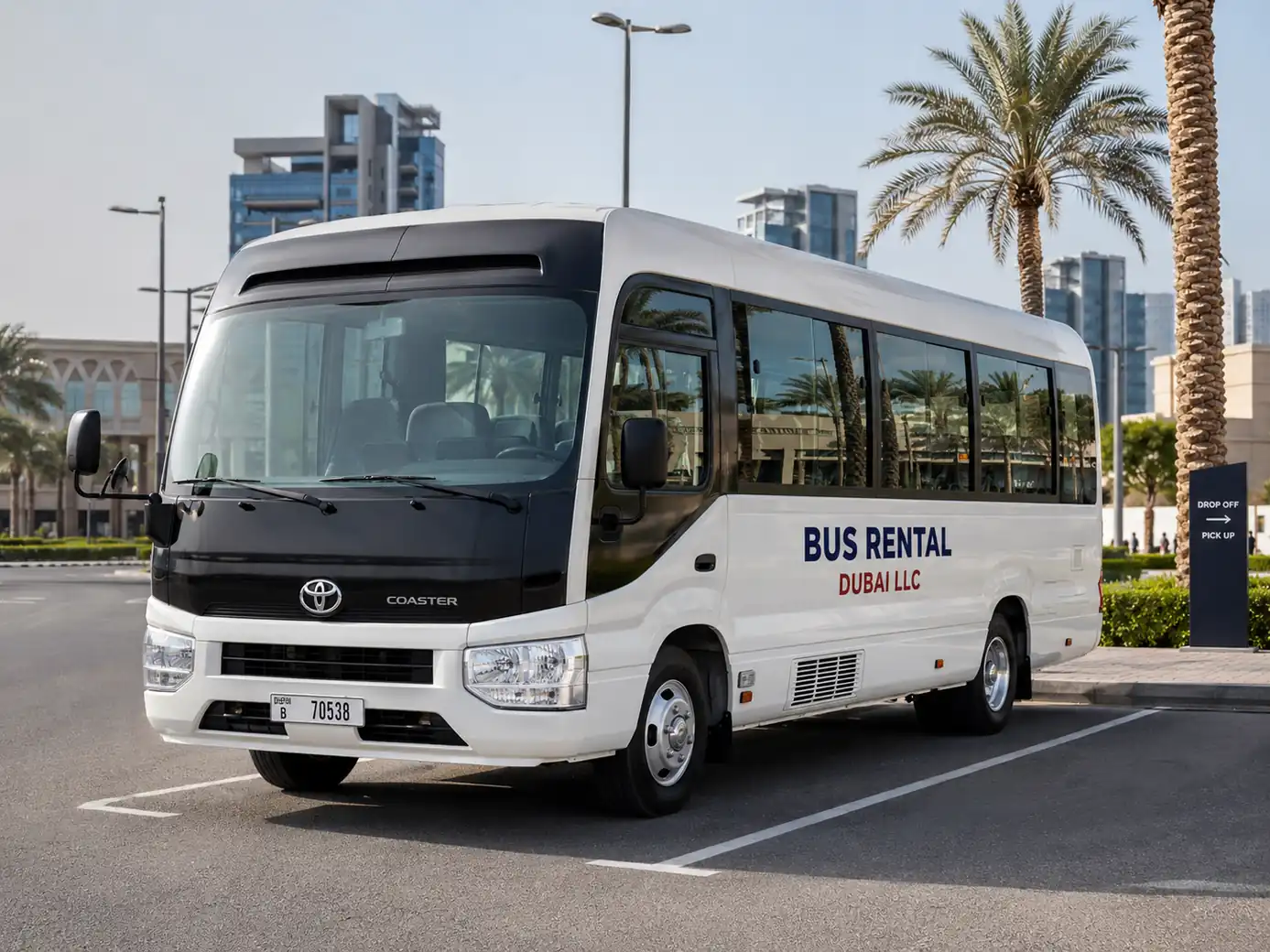
A useful group transport price is tied to a written movement scope. Compare what is included before comparing numbers, especially when the route includes waiting, multiple stops, luggage, site access, airport timing, hotel access or a late return.
| Review point | Why it matters | What to confirm |
|---|---|---|
| Vehicle fit | Capacity, luggage and comfort expectations change the best vehicle direction. | Passengers, bags, preferred vehicle and service standard. |
| Route access | Hotels, towers, airports, camps, schools and venues can change travel timing. | Exact pickup, destination, gate, terminal, block and stop list. |
| Reserved time | Waiting, return service, loops and late movement reserve driver and vehicle hours. | Pickup time, arrival target, waiting period and return time. |
| Approval scope | One written instruction keeps customer, sales and dispatch aligned. | Coordinator, passenger notes, access rules and route priorities. |
Use this form for the group transport route, passengers, luggage, timing and vehicle notes. The recipient email stays server-side inside router settings and is not placed inside the public static page.
Most group transport problems start from missing instructions rather than the vehicle itself. These checks help keep the movement clear before travel day.
A group transport quote needs capacity plus access, luggage and timing, not only a seat number.
The driver needs the exact meeting point for hotel pickups, residential communities and event entrances; a broad area can still cause a wrong-side arrival.
For group transport, drop-only, standby and return-later service reserve the vehicle differently and should not be priced as the same movement.
For group transport, passenger count, luggage and route changes should be sent before dispatch so the vehicle remains suitable.
Before confirming group transport, keep route, vehicle direction, passenger count, luggage, timing and return scope written together. A professional transport plan should reduce follow-up questions and make the booking easier for the customer, coordinator and driver.
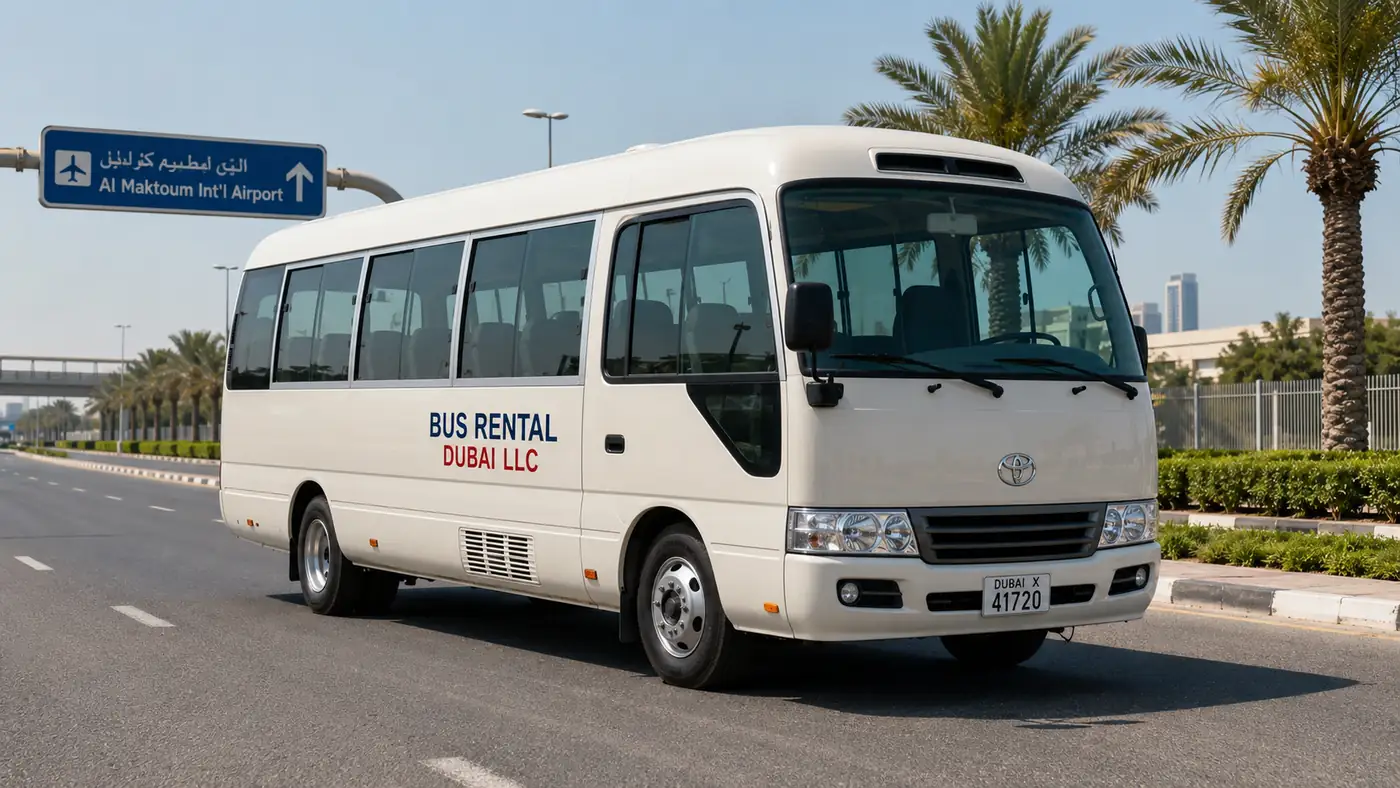
For group transport, send pickup point, destination, date, ready time, passenger count, luggage, access notes, waiting or return scope and one coordinator contact.
The team checks passenger count, luggage, access space, route distance, comfort expectation and whether everyone should travel together before recommending a vehicle for group transport.
Yes. For group transport, include waiting period, return timing, stop order and any shuttle loop before confirmation so the quote reflects the real reservation time.
Two group transport routes can differ because of vehicle size, distance, stop count, pickup access, luggage, reserved hours, traffic timing and late return rules.
For group transport, passengers should receive the exact boarding point, ready time, coordinator contact, luggage instruction and return plan.
Prepare one group transport route brief with the essentials so the transport team can answer with vehicle fit, pricing basis and booking readiness.
Share group transport pickup, destination, date, time, passengers, luggage and return scope. The reply can then focus on vehicle direction, quote factors and booking readiness.