Provide the exact pickup, destination, planned stops, terminal, gate or venue entrance. Add access notes, parking instructions and the coordinator who will be reachable on travel day.
Planned group transport across Dubai and the UAE
Bus Rental Dubai With Driver
Bus Rental Dubai helps you choose a van, minibus or coach with driver around the real route, passenger count, luggage and operating time. Send the pickup, destination, date, timing and trip purpose for clear guidance and a written quote covering airport, staff, labour, event, education, tourism and inter-emirate transport.
Van with driverMinibus hireLuxury coachStaff transportAirport transferEvent transportUAE travel

Detailed enquiry
Send the Details That Make the Quote Accurate
The more complete the enquiry, the faster the team can check the correct vehicle and operating scope.
What to send
State reporting, departure, waiting, return and any split-shift hours. Include flight, event, school or work-shift timing that controls the vehicle duty.
Confirm passenger count, passenger type, supervisors, luggage and any mobility or equipment needs. This determines practical capacity and the correct service category.
Specify airport, hotel, event, staff, labour, school, tour, private or monthly transport. Add comfort, document, branding or reporting expectations where relevant.
For urgent availability checks, use the Choose WhatsApp button and select the correct service desk.
Service introduction
Plan Group Transport With a Company That Understands the Duty
BusRentalDubai operates as a service brand within Wadi Swat Buses Rental LLC to help clients arrange vans, minibuses and coaches with driver across Dubai and the UAE. The company supports airport transfers, staff routes, labour transport, school trips, events, city tours and private group travel with quotations prepared around the real operating requirement.
The business is registered in Dubai and works within the transport-licensing framework used across the UAE, including Dubai RTA, Sharjah SRTA, RAKTA, Ajman Transport, Abu Dhabi Transport and Fujairah transport authorities. Instead of overloading the homepage with internal paperwork, this page focuses on what matters to the client first: choosing the right vehicle, understanding the commercial scope and sending complete booking details.
You do not need to know the exact model before contacting us. Start with the route, schedule, passenger count, luggage and service type, and the team can review practical capacity, access, duty hours and comfort level before the quotation is approved.
About Bus Rental DubaiShare the exact pickup, destination, planned stops and a reachable coordinator. Add gate, hotel, terminal, loading-bay or community access notes so the vehicle can enter and stage correctly.
Include the reporting time, departure, expected waiting, return time and any split shift. Peak traffic, airport arrivals and event road closures should be allowed for before confirmation.
Confirm adults, staff, workers, students or tourists, plus supervisors and luggage. Keep a sensible capacity allowance so seating, aisle access and baggage space remain practical.
State whether the duty is airport, hotel, corporate, staff, labour, school, event, tour or private. Comfort level, vehicle age, AC, luggage and document requirements should match the passenger type.
Planning first
Start With the Route, Timing and Passenger Plan
A strong transport plan starts with the duty, not with a vehicle photo. Confirm route access, operating hours, passenger profile, luggage, stops and service expectations before selecting capacity.
Check the exact pickup and drop-off, road width, turning space, coach entry, loading restrictions, parking and destination rules. A route that suits a van may not safely or legally suit a full-size coach.
Count confirmed passengers, supervisors, mobility needs, luggage and equipment, then keep a sensible spare-seat margin. Choose by usable seating and storage space rather than the headline seat number alone.
Include reporting, boarding, traffic, waiting, split shifts, return duty and realistic driver hours. Airport schedules, exhibitions, school dismissal and public events can materially change the operating window.
Airport, event, staff, labour, school and tourism bookings have different coordination and document needs. Confirm passenger type, service standard, supervision and operational responsibility before vehicle selection.
Reserve realistic space for suitcases, tools, samples, sports items, wheelchairs or event equipment. Large luggage volumes may require a bigger vehicle even when the passenger count appears to fit.
Verify gate height, loading bay, hotel driveway, terminal lane, school zone, worksite entrance and parking limits. Share security procedures and permit requirements early to avoid arrival delays.
Confirm the vehicle category, passenger use, insurance, permits and any school, airport, venue or industrial-site instructions. Procurement teams should request the documents relevant to the exact duty.
Agree the dispatch contact, passenger coordinator, backup process, route briefing and reporting responsibility. Recurring services should also define replacement support and how schedule changes are approved.
What Changes the Right Vehicle for Your Trip
The correct choice is the vehicle that can complete your duty comfortably, enter every pickup point and carry the real passenger and luggage load—not simply the vehicle with a published seat number.
Start with the confirmed passengers, but allow for supervisors, guides, coordinators or late additions. Then describe the luggage honestly. Airport groups, sports teams and exhibition delegates may need substantially more storage than a staff route carrying the same number of people.
Route access can change the recommendation. A full-size coach may offer the best cabin comfort yet be unsuitable for a narrow hotel driveway, basement loading area, community gate or restricted event lane. Sharing the exact entrance, not only the destination name, allows the team to review practical access before pricing.
The duty length also matters. A compact vehicle may be efficient for a short local transfer, while a longer inter-emirate journey may justify more legroom, luggage capacity and passenger facilities. Tell us where the group is going, how long the vehicle is needed and what experience the passengers expect.
- Confirm adults, staff, workers, students, supervisors and any mobility requirement.
- List suitcases, tools, samples, sports items or event equipment separately.
- Share every pickup, stop, terminal, gate and final drop-off.
- State whether the vehicle waits, returns later or remains on standby.
A complete requirement lets the quotation recommend a practical category rather than leaving the client to guess from a fleet photograph.
Access, Luggage and Timing Can Change Practical Capacity
A vehicle can appear large enough on paper and still be the wrong commercial choice when luggage, access restrictions or a long operating window are included.
Usable capacity is the number of passengers who can travel with their belongings while keeping aisles, boarding and emergency access practical. This is why a 14-seat van may not be the right choice for fourteen airport passengers with large suitcases, and why a 35-seat coach may be more suitable than a smaller bus for a medium group carrying exhibition equipment.
Timing affects both price and service reliability. Reporting time, passenger boarding, traffic exposure, waiting, split shifts and the return journey should be included in the duty. A quotation based only on the first departure can look cheaper but fail to cover the service the client actually needs.
Access should be checked before the vehicle is allocated. Hotel port-cochères, school zones, industrial gates, airport lanes and event holding areas can have different height, turning, permit and parking rules. Early confirmation reduces the risk of last-minute relocation or a delayed pickup.
- Provide a photo, pin or entrance note when the pickup is difficult to identify.
- Allow realistic boarding time for large groups and luggage.
- Mention security checks, permits or coordinator access requirements.
- Ask the written quote to state the committed vehicle category and duty hours.
The planning team should explain any recommended capacity allowance so you know why a slightly larger vehicle may protect the journey.
Booking and pricing
See the Full Commercial Scope Before You Approve
One-time trips, daily routes and monthly contracts need different pricing and operating assumptions. A complete quotation should show the duty, vehicle category and exclusions clearly.
- One-way: defined pickup and destination.
- Return: outbound and return with agreed waiting.
- Full day: vehicle and driver for a defined window.
- Monthly route: recurring staff, labour, school or shuttle service.
- Distance and duty time: including waiting and split shifts.
- Vehicle category: capacity, luggage and comfort level.
- Date and demand: exhibitions, weekends and peak travel.
- Tolls and access: Salik, parking, permits and restricted areas.
Choose a Booking Format That Matches the Duty
One-way, return, full-day and monthly services are priced and managed differently. Choosing the correct format helps the quotation reflect the real work instead of relying on an incomplete headline rate.
A one-way transfer suits a defined pickup and destination when the vehicle is released after drop-off. A return service covers an outbound journey and a later collection, but the quote must state whether the driver waits, leaves and returns, or completes another agreed operating pattern.
A full-day booking is useful when the group needs several movements, changing stops or standby support within an agreed window. It should not be assumed to mean unlimited hours or unlimited distance. The included duty, overtime method and any parking or permit costs should be visible before approval.
A monthly route is a recurring service rather than a collection of unrelated daily trips. It needs working days, pickup points, shifts, passenger estimates, reporting rules, change control, invoicing and replacement expectations. A clear route schedule is more valuable than a vague monthly price.
- Use one-way for a single defined movement with no later collection.
- Use return when outbound and return times are known.
- Use full-day for multiple movements inside a controlled duty window.
- Use monthly for recurring staff, labour, school or shuttle requirements.
Tell the team how the vehicle will be used throughout the day so the commercial format matches the operational reality.
Read the Written Quote Before You Compare the Price
Two suppliers can quote different numbers for what appears to be the same trip because the hours, route, vehicle standard and additional charges are not identical.
A useful quotation identifies the pickup, destination, stops, reporting time, return plan, passenger count and vehicle category. It should also state the included hours and explain what happens when the group is late, the route changes or the vehicle is kept beyond the agreed duty.
Commercial items such as VAT, Salik, parking, airport charges, venue permits, waiting, overtime and driver accommodation should be shown as included, excluded or subject to confirmation. This allows you to compare the complete operating scope instead of accepting a low number that may later require additions.
The vehicle commitment also matters. If a specific model is essential, the written confirmation should say so. If the agreement is for an equivalent category, the service standard, seating range, luggage requirement and comfort level should be defined so that substitution remains commercially fair.
- Compare the same route, dates, times and passenger assumptions.
- Compare the same vehicle category and comfort level.
- Check all toll, parking, waiting and overtime treatment.
- Confirm cancellation, amendment and substitution conditions.
The lowest headline price is useful only when it covers the same work, risk and service responsibility.
Indicative AED rates
See Indicative Bus Rental Dubai Rates Before You Enquire
These rounded planning ranges help clients compare vehicle categories before requesting a route-specific quotation. Final rates depend on route, date, duty hours, waiting, stops, Salik, parking, access charges, luggage and confirmed availability.
| Vehicle category | Indicative hourly range | Indicative daily range | Typical use |
|---|---|---|---|
| 7–10 Seater Vans | AED 60–230 | AED 270–1610 | Small groups, local transfers and compact routes |
| 12–15 Seater Vans | AED 70–110 | AED 320–700 | Airport, hotel, city and staff movement |
| Luxury Vans | AED 130–420 | AED 880–3210 | VIP guests, executives and premium transfers |
| 20–34 Seater Minibuses | AED 70–110 | AED 610–1340 | Schools, hotels, events and medium groups |
| 35 Seater Luxury Buses | AED 90–150 | AED 700–1340 | Corporate groups, tourism and events |
| 50–53 Seater Luxury Buses | AED 100–240 | AED 790–1790 | Large groups, conferences and UAE travel |
| 49–71 Seater Staff Buses | AED 100–250 | AED 790–1790 | Daily staff, hotel and business routes |
| 50–67 Seater Labour AC Buses | AED 80–120 | AED 780–1050 | Camp-to-site and industrial transport |
| 80–84 Seater Labour Non-AC Buses | AED 110–130 | AED 880–1230 | High-capacity workforce routes |
| School Buses | AED 80–200 | AED 780–1470 | School trips, activities and education transport |
| Tourism Buses | AED 80–250 | AED 590–2160 | Tours, attractions and inter-emirate travel |
Important: These are indicative comparison ranges, not fixed offers. The written quotation remains the final commercial reference.
How to Use the Planning Rate Table
The ranges below help you shortlist a suitable category. They are not automatic offers because the route and operating duty remain the main commercial inputs.
Hourly ranges are most useful for short local duties with a clearly defined minimum and release time. Daily ranges help compare longer bookings, but the meaning of “daily” must still be confirmed: included hours, distance, waiting, parking and return obligations can differ.
Very wide ranges normally indicate that the category covers different vehicle standards or duty patterns. A compact local transfer and a premium hotel movement may use vehicles with similar seat counts but different presentation, luggage arrangements and operating expectations. The quotation should identify the category being offered.
Prices can also change during exhibitions, holidays, school periods and other high-demand dates. Early enquiries improve the chance of securing the preferred category, but availability should never be assumed until the written confirmation is issued.
- Use the table to compare categories, not to calculate a final total without route review.
- Ask whether VAT, tolls, parking, permits and overtime are included.
- Share the exact date because demand affects availability and price.
- Request a written category and duty description before approval.
All published ranges should be reviewed and approved by the commercial team before the theme is placed live.

Fleet categories
Compare the Fleet by Trip Type, Not by a Long Vehicle List
Compare the full range without using a carousel. Every category is shown as a separate, stable card with a clear purpose and direct page link.
7–15 seats
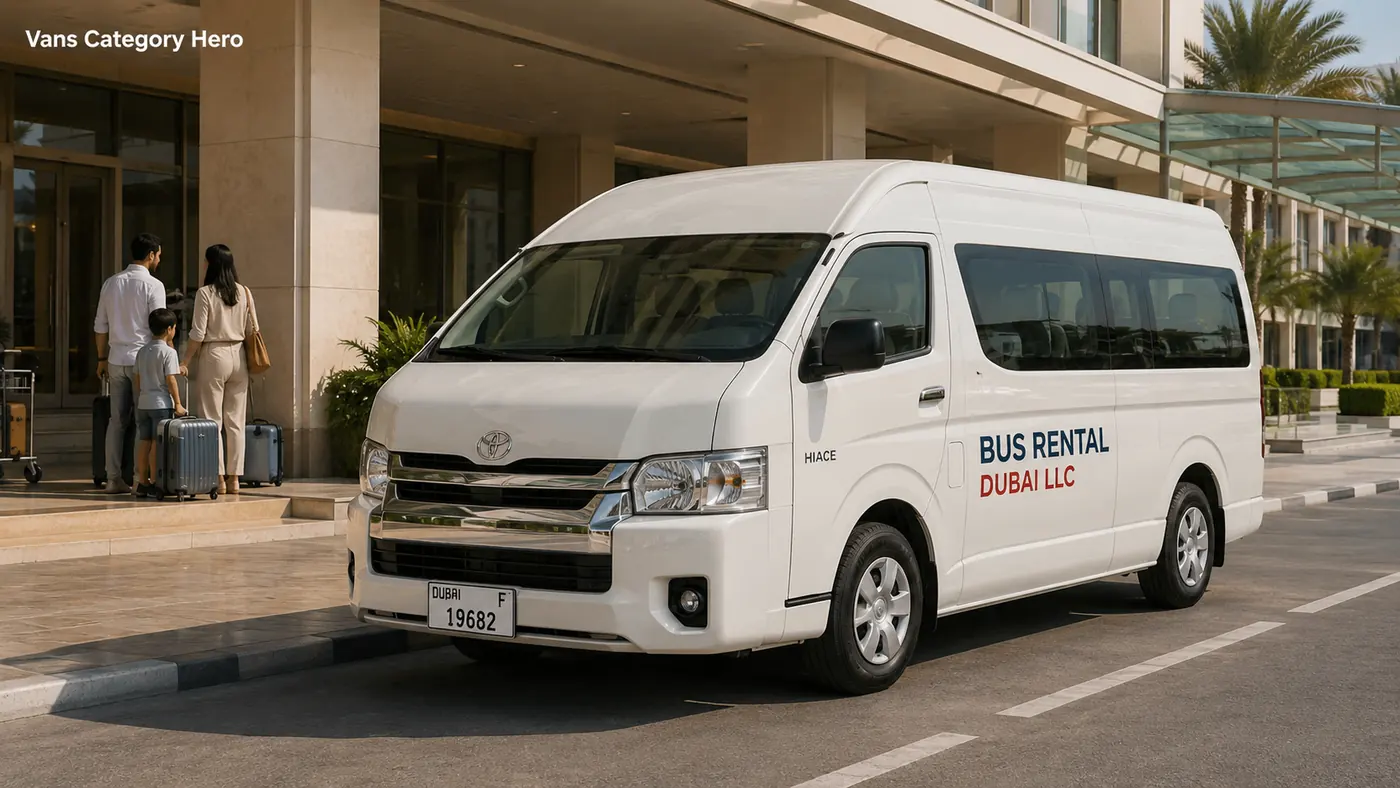
Passenger Vans
Compact transport for airport pickups, hotels, meetings and small groups. Compare passenger count, luggage volume, high-roof access and whether several city stops are required.
Best for7–15 passengers, light luggage, hotel transfers, meetings and compact routes.
Explore van rental Dubai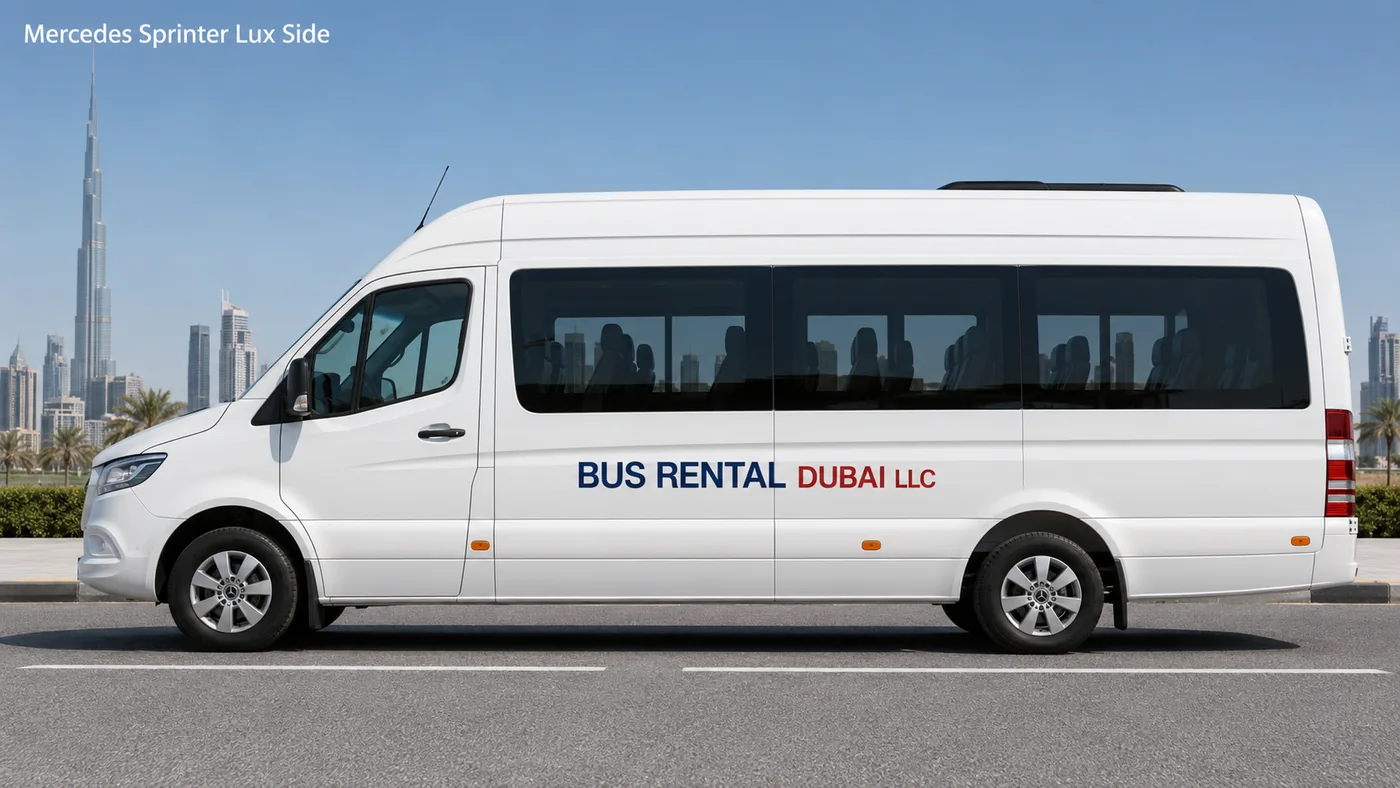
VIP small groups
Luxury Vans
Executive transport for corporate guests, VIP movements, hotels and private travel. Confirm leather seating, luggage, chauffeur presentation and the expected premium service level.
Best forExecutives, VIP guests, hotel arrivals, roadshows and premium small-group travel.
Review Mercedes Sprinter luxury vans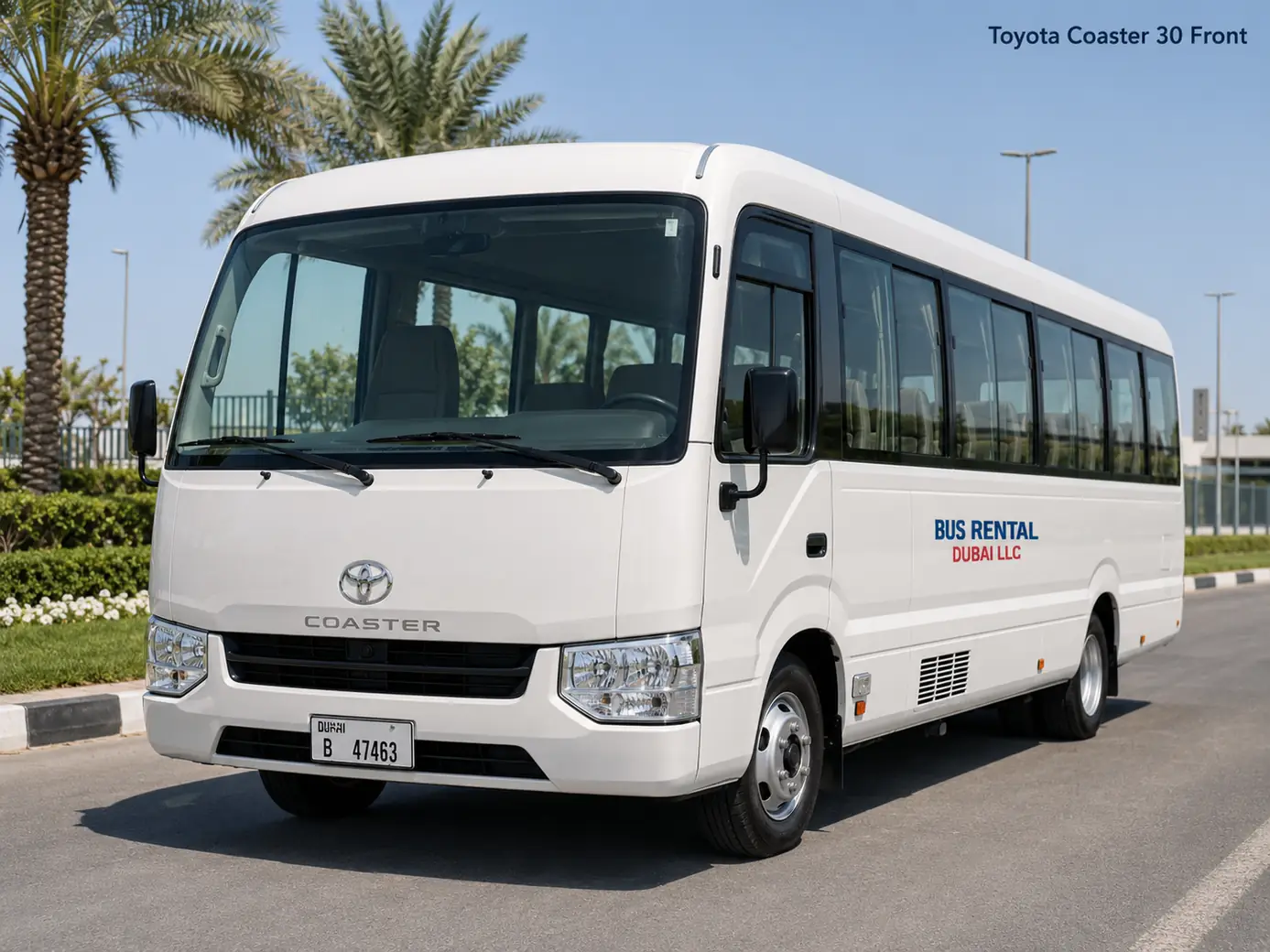
20–34 seats
Coaster Buses
Flexible medium-capacity transport for schools, hotels, events and staff teams. Check aisle access, luggage, seat configuration and whether a standard or premium interior is required.
Best for20–30 passengers, school trips, hotel groups, staff teams and event transfers.
Explore Coaster bus rental Dubai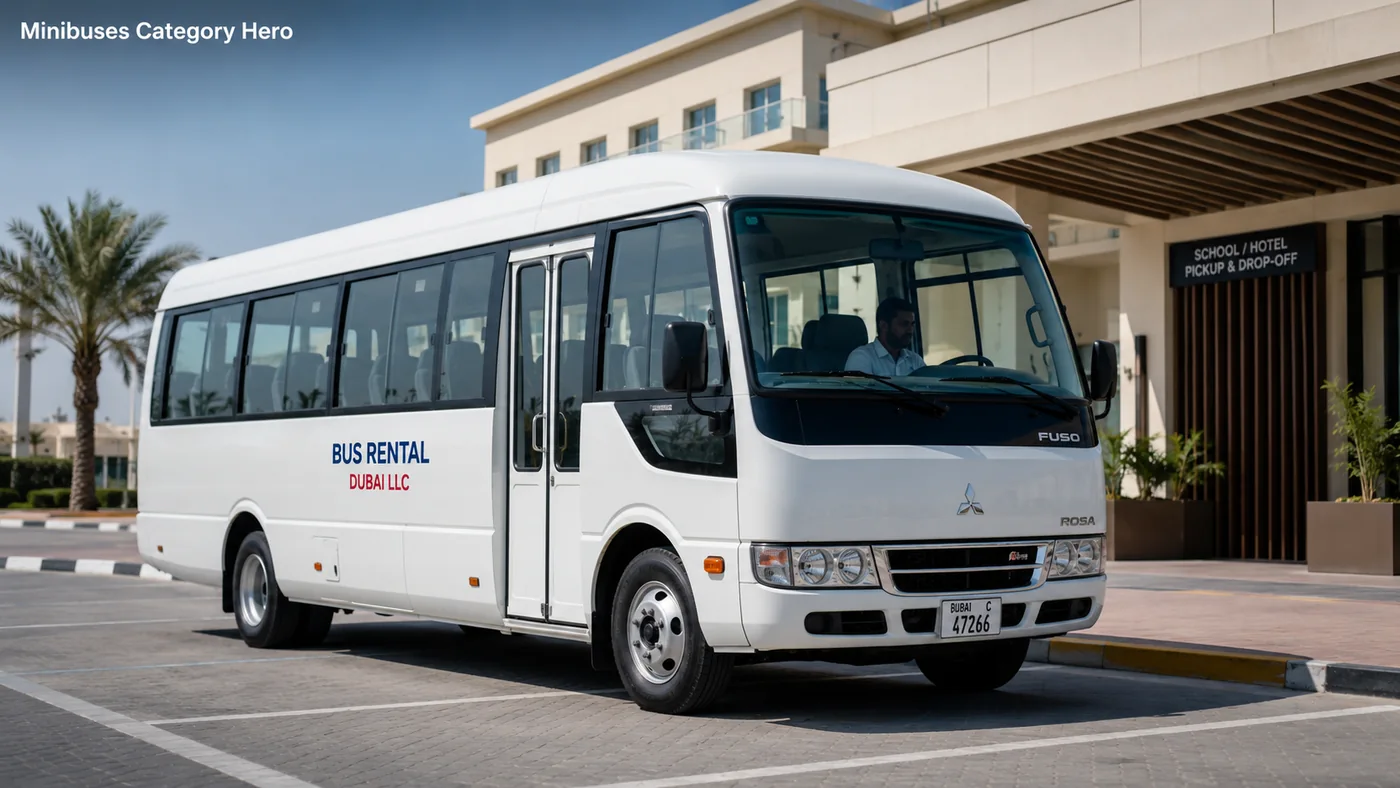
20–34 seats
Minibuses
Practical group movement for tours, transfers and daily services. Minibuses bridge the gap between vans and coaches while remaining easier to position at many pickup points.
Best forMedium groups, city tours, recurring shuttles, hotels and multi-stop movement.
Explore minibus rental Dubai
35 seats
35 Seater Buses
Mid-size coach transport for corporate groups, tourism and events. Confirm luggage, onboard comfort, venue access and whether the vehicle must wait or return later.
Best forCorporate delegations, conferences, tours, weddings and medium-size group travel.
Review 35 seater bus rental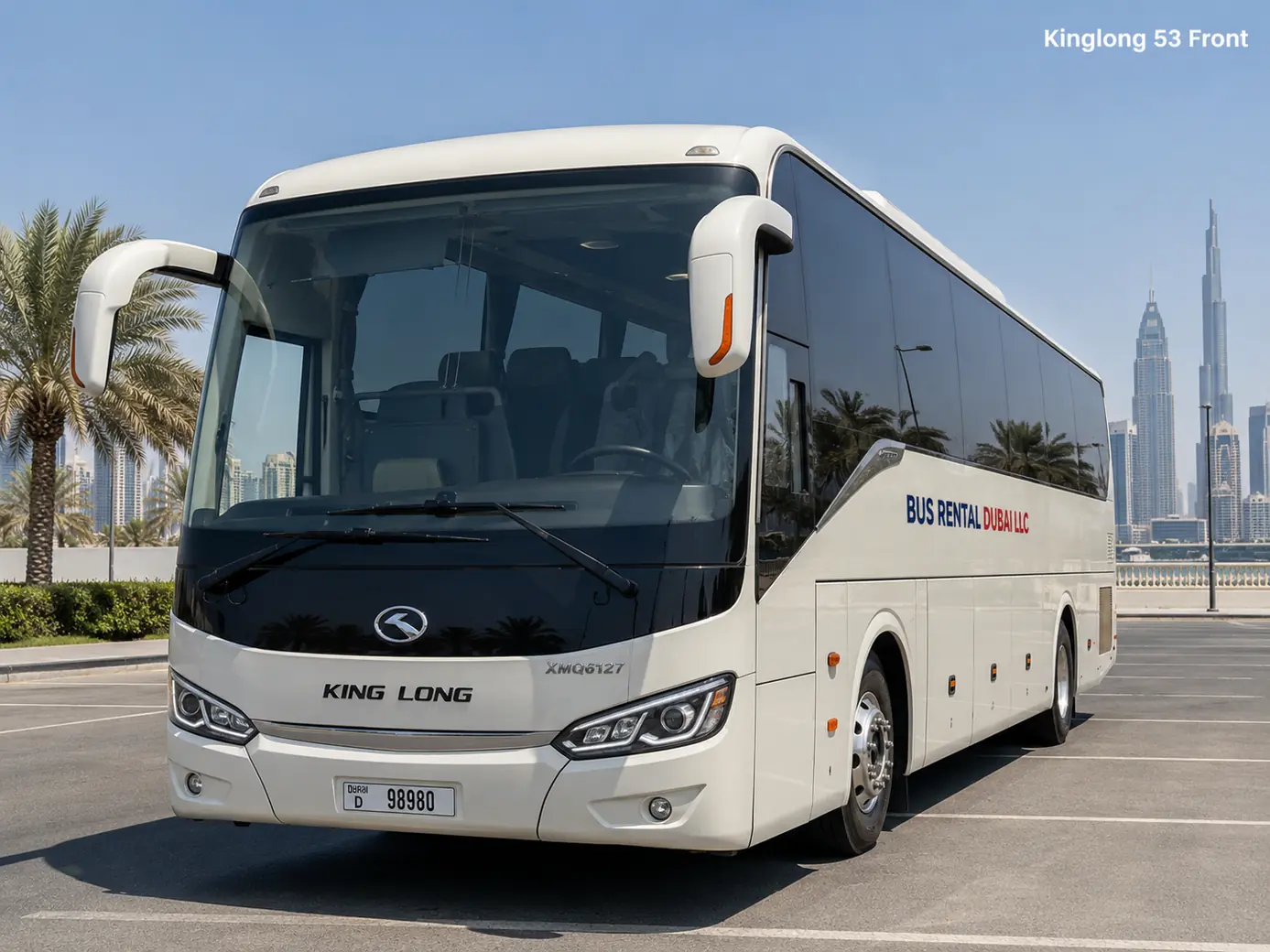
50–53 seats
Luxury Coaches
Full-size comfort for tourism, conferences and UAE travel, with stronger luggage capacity and long-distance suitability. Route access and coach parking must be checked in advance.
Best for50–53 passengers, large events, airport groups, tourism and inter-emirate journeys.
Review 50 seater coach rental
Corporate routes
Corporate Shuttles
Professional office and business-park transport for meetings, roadshows and recurring shuttles. Plan branding expectations, passenger lists, timed stops and coordinator reporting.
Planning focusPunctual office movement, business parks, executive groups and event delegates.
Plan a corporate shuttle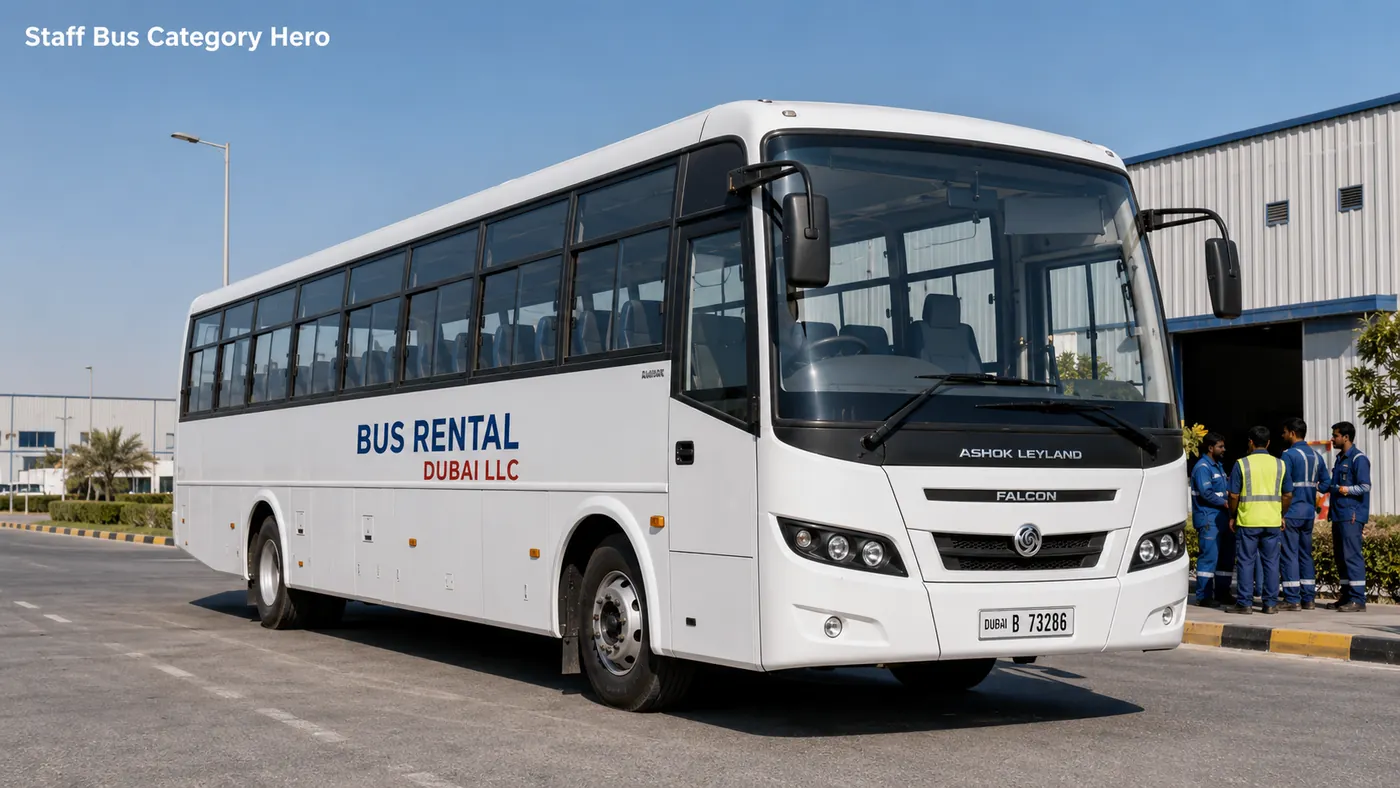
Daily routes
Staff Buses
Shift-based and monthly transport for offices, hotels, hospitals, facilities and warehouses. The plan should define stops, attendance, working days, overtime and backup support.
Planning focusDaily staff routes, split shifts, recurring contracts and workplace transport.
Plan staff transport Dubai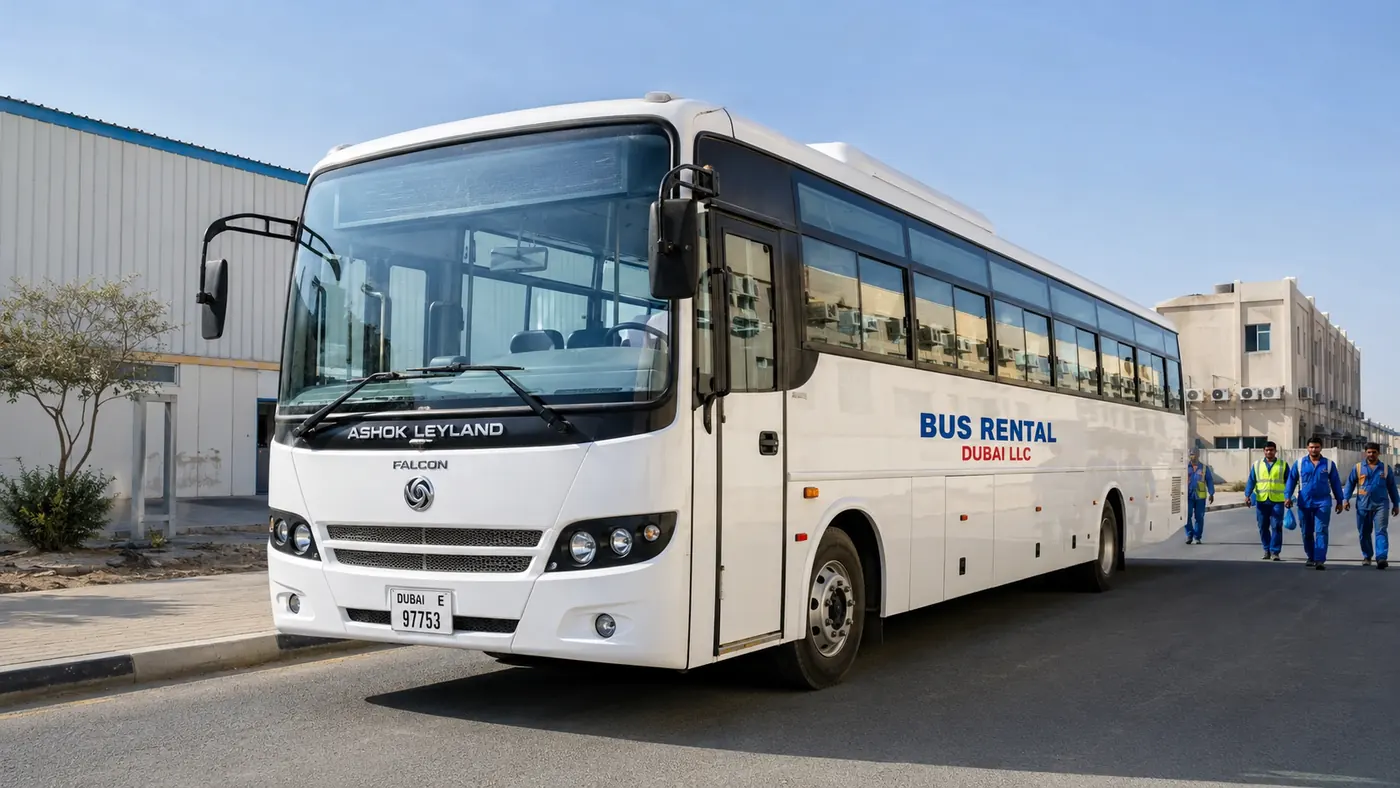
Industrial routes
Labour Buses
Workforce transport for camps, sites, factories and warehouses with practical capacity and durable interiors. Confirm AC requirement, PPE rules, gate access and shift return timing.
Planning focusCamp-to-site routes, industrial shifts, construction projects and workforce contracts.
Plan labour bus rental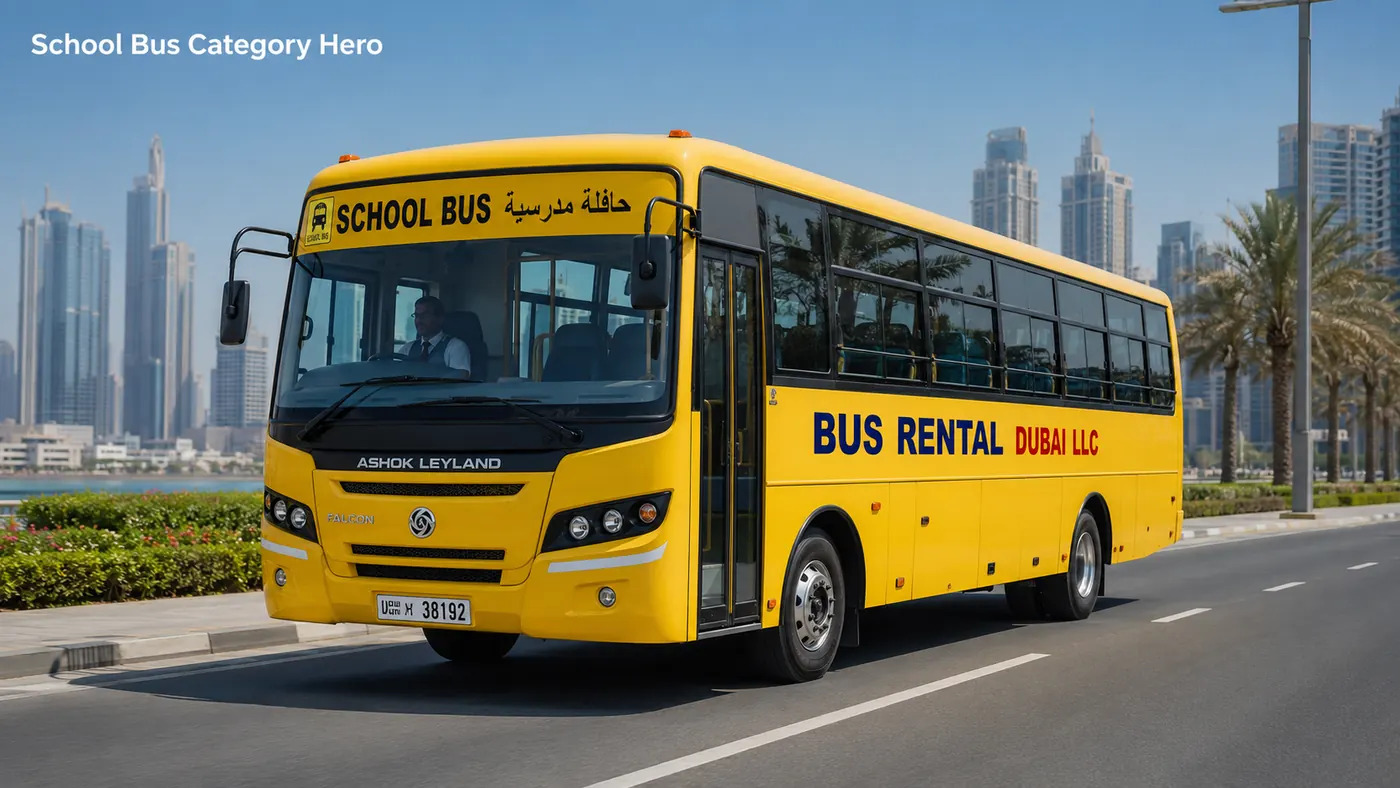
School duty
School Buses
Organised transport for schools, universities, activities and educational groups. Confirm supervision, approved capacity, seat belts, pickup discipline and institution requirements.
Best forSchool trips, university routes, sports days, activities and supervised group travel.
Review school transport services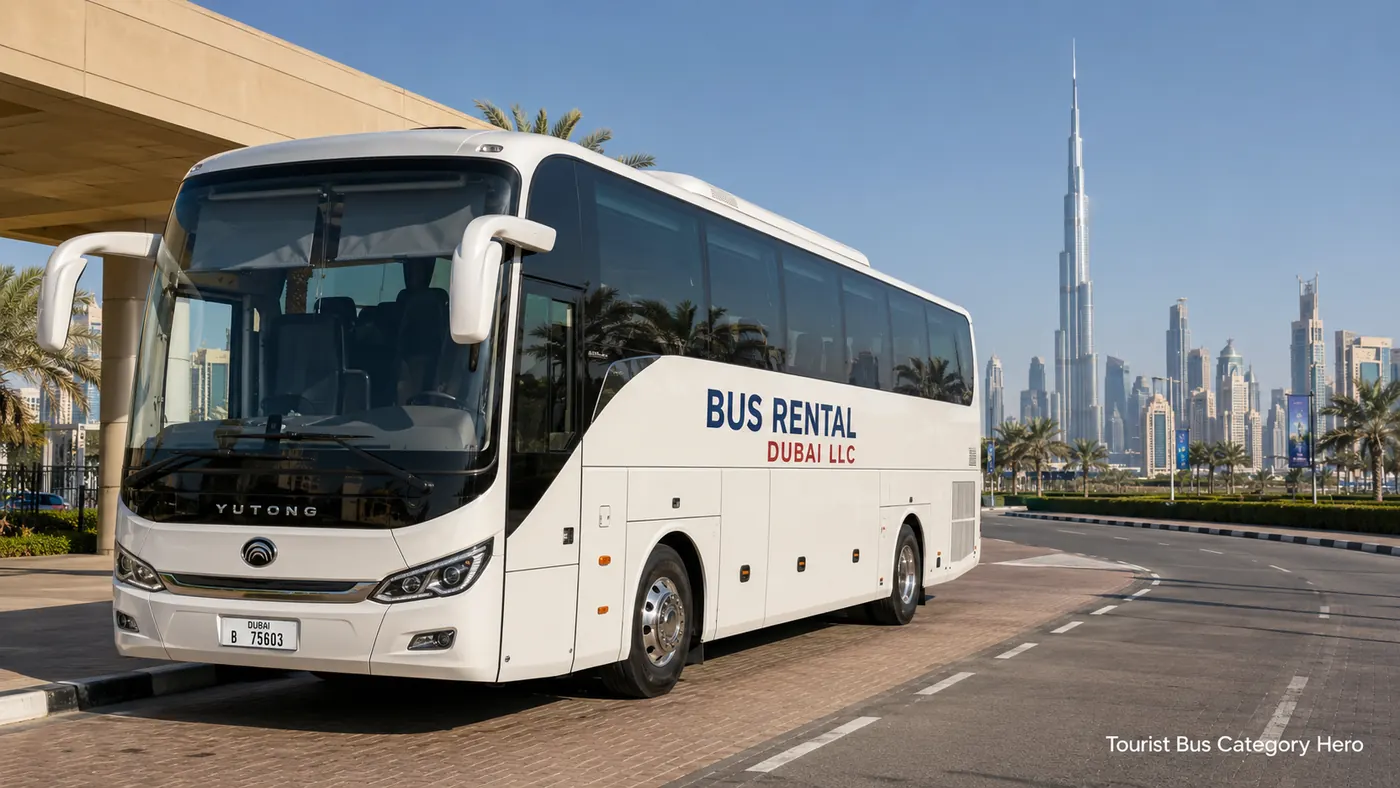
Tours and groups
Tourist Buses
Comfortable sightseeing, attraction and inter-emirate travel with itinerary-based timing. Consider guide space, luggage, attraction access, driver duty and group comfort.
Best forCity tours, attractions, hotel groups, excursions and UAE tourism itineraries.
Plan tourist bus rental
DXB and DWC
Airport Transfer Fleet
Luggage-aware group transfers for DXB, DWC, hotels and conference arrivals. Share terminal, flight, meet-and-greet, luggage and delayed-flight instructions.
Planning focusAirport arrivals, departures, hotel groups, delegations and luggage-heavy transfers.
Plan an airport transfer busPassenger Vans for Small Groups and Compact Routes
A passenger van can be the most efficient choice when the group is small, the route has restricted access or several city stops must be completed without using a larger coach.
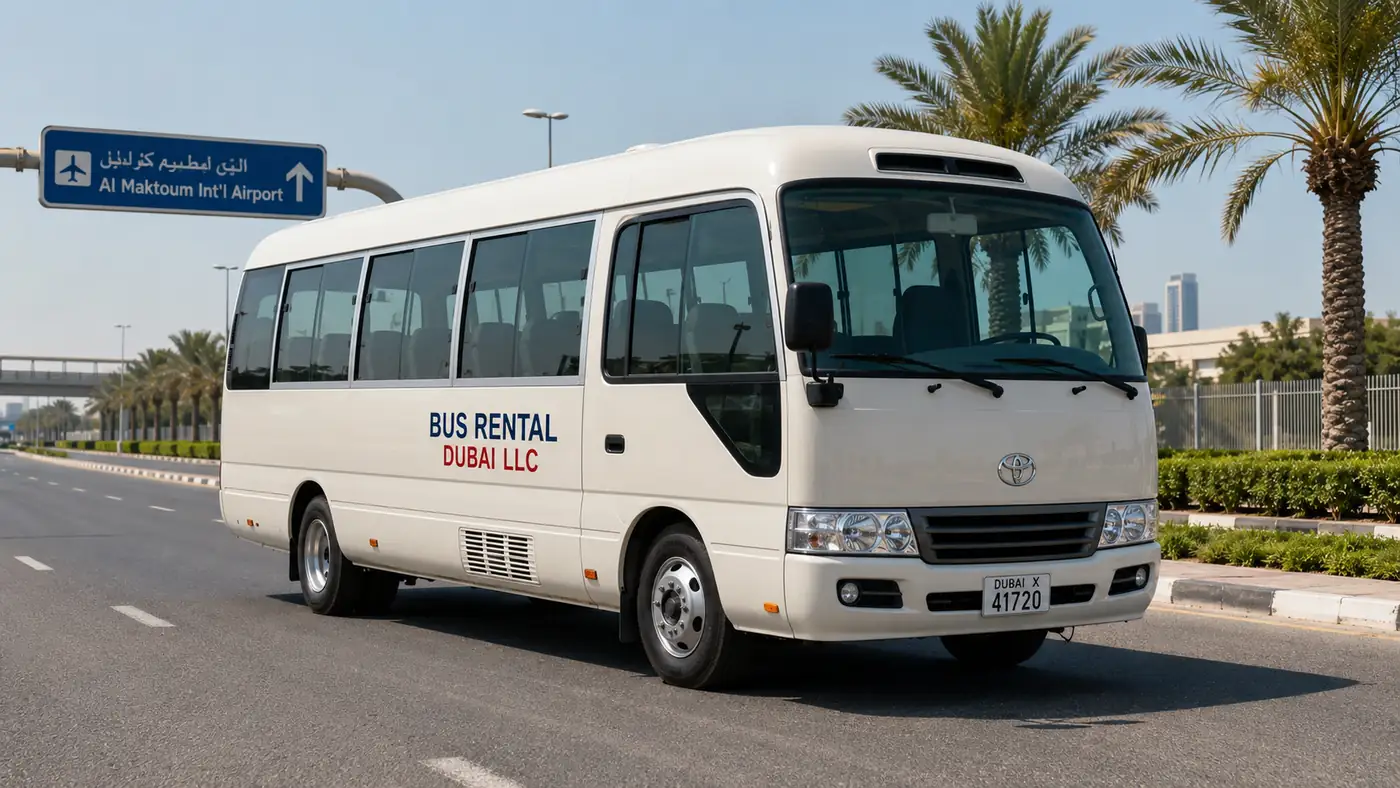
Vans are commonly considered for airport pickups, hotel transfers, meetings, site visits and private groups. Practical selection depends on the seat layout, roof height and luggage space. A van with the right number of seats may still be unsuitable when every passenger carries a large suitcase.
High-roof access can improve boarding for adults and staff groups, while a luxury van may be preferred for executives, VIP guests or roadshows where presentation and individual comfort are part of the service. The quotation should distinguish a standard passenger van from a premium category.
For multiple stops, provide the stop order and expected boarding time. A compact vehicle can move efficiently through city areas, but too many pickups can extend the duty and make the arrival time unrealistic. Route grouping should be reviewed before the schedule is promised.
- Best for compact groups, meetings, hotels and light-luggage transfers.
- Check practical luggage volume, not only passenger seats.
- Confirm standard or luxury presentation before pricing.
- Share community, basement or hotel-access restrictions.
The fleet recommendation may reference common van types as examples, but a specific model is guaranteed only when it appears in the written confirmation.
Coaster Buses and Minibuses for Medium Groups
A minibus is often the practical middle choice when a van is too small and a full-size coach would add unnecessary access, parking or cost complications.
Medium-capacity buses suit hotel groups, school and university activities, event transfers, staff teams and private tours. The most useful comparison is not only the advertised seat count. Ask about aisle width, seat arrangement, luggage storage, entry steps and whether the interior standard matches the journey length.
A city transfer with light personal items may work well in a standard configuration, while an airport group carrying suitcases may require fewer passengers than the maximum seating number suggests. For event or education movements, supervision seats and equipment should be included in the capacity calculation.
Minibuses can also be easier to stage at hotels and venues where a large coach cannot wait. However, the route still needs review. Narrow service roads, restricted loading zones and security-controlled sites may require a precise meeting point and a coordinator who can guide the group.
- Best for medium groups that need easier city and venue access.
- Check luggage, aisle and seat configuration for the intended duty.
- Include supervisors, guides and equipment in the capacity plan.
- Confirm pickup staging and parking before the service date.
Share the passenger type and journey purpose so the team can distinguish a practical standard minibus from a more comfortable premium requirement.
Luxury Coaches for Conferences, Tours and Long Routes
A luxury coach should be selected when the group needs more than seats: luggage capacity, journey comfort, professional presentation and a cabin suitable for a longer duty all become part of the decision.
Thirty-five-seat coaches can be useful for corporate groups, delegations and medium-size tours when coach access is available. Full-size 50–53-seat coaches suit larger conferences, hotel groups and inter-emirate movements, particularly when luggage storage beneath the cabin is important.
A larger coach is not automatically the better choice. The pickup and destination must allow the vehicle to enter, turn, load and park. Event venues may require permits or off-site holding, while some hotels and communities use a separate coach entrance. These details should be reviewed before the vehicle is committed.
For long routes, ask about the cabin standard, AC, seat comfort, luggage bay and planned stops. If a specific brand or model is required for a VIP or procurement brief, include that requirement before pricing rather than assuming every coach in the category is identical.
- Consider a 35-seat category for medium groups needing coach-level comfort.
- Consider a 50–53-seat category for large groups and significant luggage.
- Confirm coach access, parking and permit responsibility.
- State whether a specific model or only an equivalent category is acceptable.
Use the dedicated 35-seat and 50-seat pages to compare the planned category, then request a written route-based offer.
Staff, Labour, School and Tourist Buses Serve Different Duties
Specialist transport should be chosen around the passenger group, route pattern and operating responsibility. A bus that works for a tourist group may not be the right commercial or practical choice for a recurring workforce route.
Staff transport focuses on punctual shift arrival, pickup clusters, working days, attendance changes and communication with HR or operations. Labour transport may add camp and site access, PPE, large shift volumes and a choice between AC and non-AC high-capacity categories.
Education transport needs clear passenger lists, supervision, pickup control and timing appropriate to the school or activity. No safety or authority approval should be assumed from the vehicle name alone; relevant documents and operating requirements must be checked for the actual service.
Tourist buses place greater emphasis on comfort, luggage, guide coordination, attraction access and a journey plan that may cross several emirates. The route, stops and waiting should be agreed in advance so the driver and group coordinator work from the same schedule.
- Staff routes require shift, stop and working-day controls.
- Labour routes require camp/site access and capacity planning.
- Education trips require supervision and passenger-control details.
- Tourism duties require comfort, luggage and stop coordination.
Describe the passenger type before asking for a bus category. This lets the quotation match the operational duty rather than only the group size.


Selection guidance
How to Choose Between a Van, Minibus, Luxury Coach, Staff Bus and Labour Bus
Seat count is only one factor. Route access, luggage, duty time, passenger type and service expectations can change the correct choice.
- Confirmed passenger count with a sensible allowance.
- Luggage, equipment, wheelchairs or supervisor seats.
- Pickup access, hotel driveways, industrial gates and parking.
- Journey duration and expected comfort level.
- One-way, return, standby, split shift or monthly route.
- Included hours, waiting, overtime and driver accommodation.
- Salik, parking, airport fees and event permits.
- Vehicle category commitment and substitution rules.
Transport services
Choose the Service Around the Passenger and Operating Environment
The same vehicle can perform very different duties. Service planning should reflect the operating environment, not only the destination.
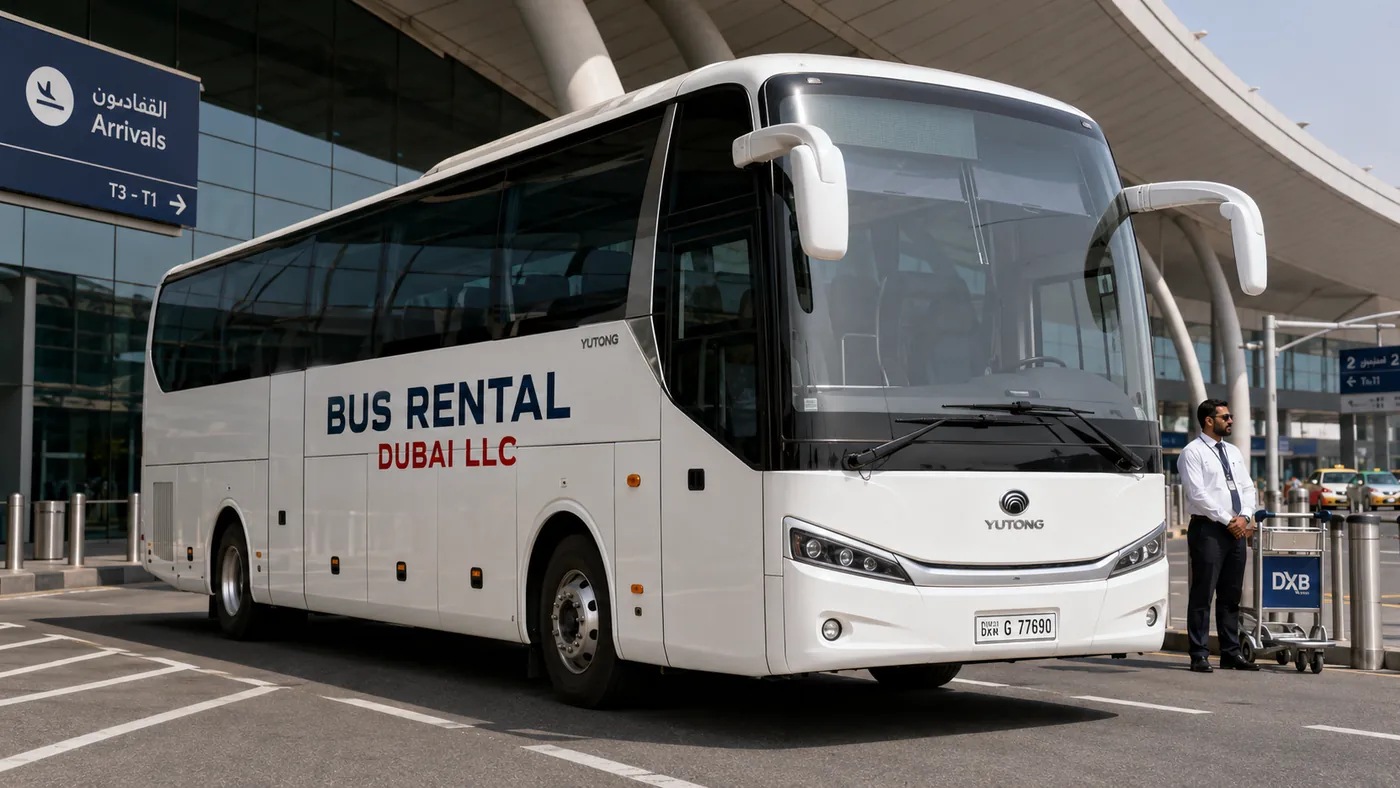
Airport and Hotel Transfers
Terminal, flight, meeting point, luggage and hotel access must be planned as one duty. Include delayed-flight handling, name-board requirements and whether the vehicle waits or returns.
Confirm before bookingAirport, terminal, flight number, destination, passenger count, luggage and meeting procedure.
Share the full movement window, access notes and the passenger coordinator so the vehicle, route timing and commercial scope can be checked properly.
Review airport and hotel transfers
Events and Exhibitions
Staged arrivals, venue permits, holding areas and return batches need one coordinated movement plan. Provide the venue, hall, gate, guest groups, equipment and event-day contact.
Confirm before bookingVenue access, reporting times, passenger waves, waiting, parking and return plan.
Share the full movement window, access notes and the passenger coordinator so the vehicle, route timing and commercial scope can be checked properly.
Plan event transport Dubai
Staff and Corporate Routes
Stops, shifts, attendance, backup planning and monthly reporting must be defined before pricing. Recurring routes also need working days, overtime rules and a change-approval process.
Confirm before bookingPickup clusters, office or site, shift times, working days, headcount and reporting needs.
Share the full movement window, access notes and the passenger coordinator so the vehicle, route timing and commercial scope can be checked properly.
Review employee transport solutions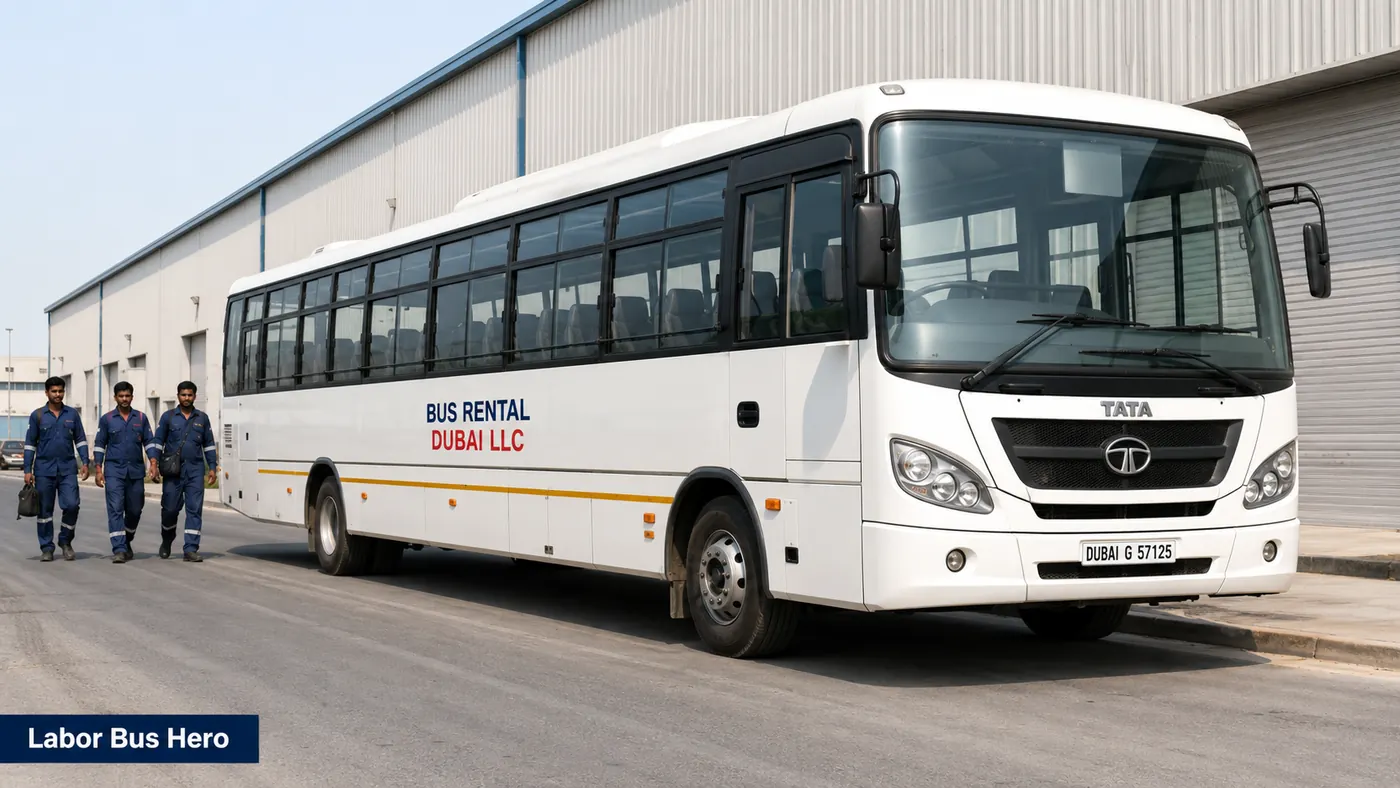
Labour and Site Transport
Camp access, industrial gates, PPE rules and shift timing must be confirmed. Choose AC or non-AC capacity according to the contract, passenger welfare and route conditions.
Confirm before bookingAccommodation, site gate, shift pattern, passenger count, AC level and safety instructions.
Share the full movement window, access notes and the passenger coordinator so the vehicle, route timing and commercial scope can be checked properly.
Review worker transport solutions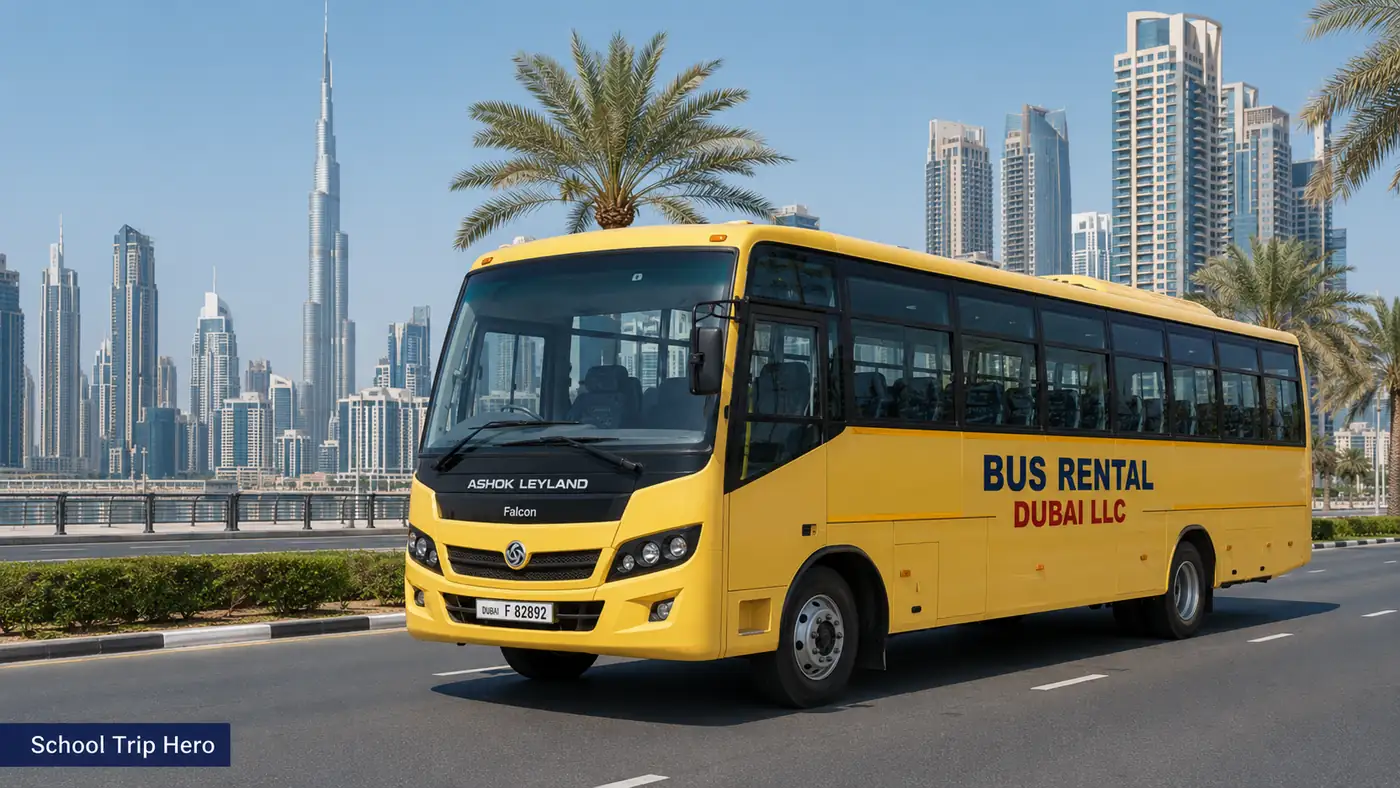
School and Educational Trips
Supervision, approved capacity, safe meeting points and clear attendance control are essential. Share institution rules, trip purpose, coordinator details and return timing.
Confirm before bookingInstitution, student count, supervisors, destination, pickup process and safety requirements.
Share the full movement window, access notes and the passenger coordinator so the vehicle, route timing and commercial scope can be checked properly.
Plan a school trip bus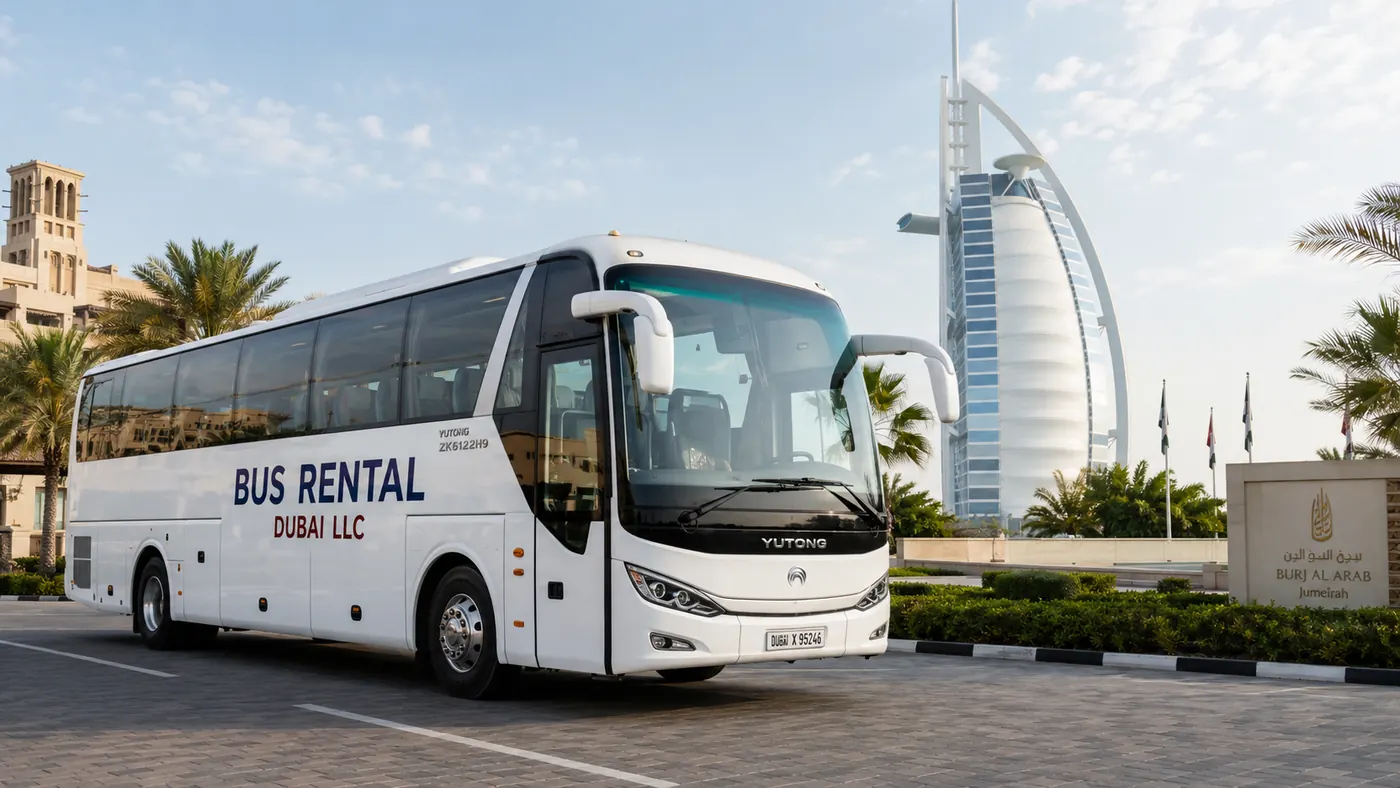
Tours and UAE Travel
Comfort, itinerary timing, attraction access and inter-emirate duty should be aligned. Longer routes require realistic rest, parking, luggage and driver-hour planning.
Confirm before bookingItinerary, attractions, hotel, guide, luggage, waiting and final return schedule.
Share the full movement window, access notes and the passenger coordinator so the vehicle, route timing and commercial scope can be checked properly.
Plan a Dubai city tour busKeep Airport and Hotel Movements on Schedule
Airport and hotel transport succeeds when the flight, meeting point, luggage and onward movement are planned together. A vehicle reservation without those details can still leave the group uncertain at arrival.
For DXB or DWC arrivals, provide the terminal, flight number, scheduled landing time, passenger count and luggage estimate. State whether a name board, meet-and-greet arrangement or hotel coordinator is responsible for gathering the passengers. The driver cannot normally remain indefinitely in a restricted terminal lane, so the meeting procedure matters.
Delayed flights should be discussed in the quotation. Confirm whether monitoring, waiting or rescheduling is included and who will communicate a major change. For departures, work backward from the required terminal arrival time and allow for hotel loading, traffic and group boarding rather than using the flight time as the pickup time.
Hotel access should be checked for coaches. Some properties allow a bus to enter the main driveway, while others use a group entrance or nearby loading point. Sharing the hotel name and entrance instructions allows the correct vehicle and staging plan to be reviewed.
- Airport, terminal, flight and passenger coordinator.
- Suitcase count, oversized items and onward destination.
- Name-board, meet-and-greet and delayed-flight procedure.
- Hotel driveway, coach entrance and waiting requirements.
For urgent flight-linked checks, use WhatsApp with the complete flight and route details instead of sending only a passenger count.
Protect Staff Shift Times and Workforce Operations
A recurring employee route is a business process. It should be designed around the shift start, realistic pickup clusters and a clear method for handling changes—not around the shortest-looking list of stops.
Begin with the work location, reporting time and expected headcount by shift. Group pickups into practical clusters, then check traffic exposure and access at each point. Adding many individual stops can make a route unreliable even when the total distance appears short.
The operating calendar should show working days, weekends, public holidays, overtime periods and seasonal changes. For monthly service, agree how passenger changes, temporary stops and shift amendments are requested and approved. This protects both the client and operator from informal instructions that alter the duty without commercial review.
The written scope should identify the vehicle category, coordinator, reporting method, replacement expectation and invoicing basis. Staff and labour services may use different vehicles and site procedures, so the passenger group and workplace rules must be stated clearly.
- Worksite, shift start and required arrival buffer.
- Pickup clusters, approximate headcount and working days.
- Change-approval, attendance and escalation contacts.
- Vehicle category, reporting and replacement expectations.
A well-planned route protects attendance and productivity; a low monthly number without a workable timetable does not.
Coordinate Events, Education Trips and Tourism Around Real Movement
Groups do not move as one line of passengers. Events, school activities and tours all require a meeting plan, a coordinator and enough time for boarding, access and changes.
For exhibitions, conferences and weddings, provide the venue, gate, reporting time, passenger waves and return plan. Large venues may use permits, holding areas or off-site parking. If guests leave in several batches, each movement should be reflected in the duty instead of assuming one final departure.
For school and university activities, confirm the supervising adults, passenger list, pickup control, destination access and expected return. The service should follow the requirements supplied for that trip. Avoid relying on generic labels such as “school bus” as proof that every operational or document condition is automatically satisfied.
For tourism, share the full itinerary, stop duration, luggage and guide details. City tours and long UAE routes need different comfort, parking and duty assumptions. The group should also know the agreed meeting point after every stop so the schedule remains manageable.
- Venue, gate, permit, parking and passenger-wave plan.
- Supervisors, passenger list and education-trip timings.
- Tour itinerary, stop duration, guide and luggage.
- Named group coordinator reachable throughout the duty.
The best service plan makes the passenger movement understandable before the driver reports, rather than solving every detail at the vehicle door.
Operational depth
Know What Should Happen Before Travel Day
Good service depends on coordination, documentation and clear responsibility before the vehicle reports.
Confirm the assigned vehicle category, driver, reporting point and passenger coordinator before travel. A final dispatch message should include contact numbers, plate details when available and the agreed pickup instructions.
Share access notes, planned stops, passenger contact, loading sequence and contingency instructions. For airports, events and sites, include the exact terminal, gate, entrance or staging location.
Allow for traffic, boarding, security checks, venue queues, driver duty and a realistic return time. Split shifts and standby periods must be stated so the quotation and operation use the same hours.
Define how delays, breakdowns, route closures or last-minute passenger changes will be handled. Monthly and high-priority duties should include a clear escalation contact and replacement procedure.
Provide the group with a precise meeting point, reporting time and responsible coordinator. Clear messages reduce missed pickups, wrong-terminal waiting and confusion after large events.
Keep the enquiry, quotation, payment approval, booking confirmation and operational notes aligned. Accurate records help finance, procurement and transport coordinators resolve changes without conflicting instructions.
What Should Happen Before the Vehicle Reports
The client should not have to discover the operating plan on travel day. The confirmed route, contacts, vehicle category and change procedure should already be clear before the driver reports.
A final route brief should contain the exact pickup, destination, stops, timing, passenger estimate and access notes. The driver or dispatcher also needs the client coordinator’s reachable number. When an airport terminal, school gate, worksite entrance or venue loading point is involved, the operational entrance should be named rather than relying on the public address alone.
The client should receive an appropriate confirmation of the service and know how urgent changes will be handled. Last-minute changes to time, route, passenger count or vehicle use may affect availability and price. A controlled amendment process is more reliable than sending multiple instructions through unrelated people.
Boarding responsibility should be understood. The driver operates the vehicle, but the client may need a group leader to assemble passengers, confirm attendance and communicate when the group is ready. For recurring routes, reporting, missed pickups and escalation should be documented at a level suitable for the contract.
- Confirmed route and operational entrance.
- Driver, dispatcher and client-coordinator contacts.
- Passenger gathering and boarding responsibility.
- Approved method for route or timing changes.
The booking is stronger when every party knows what must happen before departure and who is authorized to change the plan.
Safety and commercial clarity
Check the Driver, Vehicle and Commercial Standards
Safety and commercial clarity belong in the same booking process. Clients should know what is being supplied, how it will operate and what is included.
- Appropriate vehicle licence, registration and insurance.
- Driver eligibility and experience for the assigned duty.
- Seat belts, AC, cleanliness and serviceable condition.
- Required school, site, airport or event documentation.
- Rate validity, VAT, payment terms and cancellation rules.
- Driver, fuel, tolls, parking, permits and accommodation.
- Included hours, waiting, overtime and additional stops.
- Final vehicle category and support contact.
Ask for Evidence That Matches the Actual Service
Trust should come from relevant documents, a clear written scope and consistent communication that shows what will be supplied and how the duty will be managed.
For a commercial movement, the client may need company identity, tax details, insurance or vehicle and driver documents. The exact set depends on the passenger type, route, venue and procurement rules. Ask for what is relevant rather than treating every logo or certificate as proof of every service claim.
Vehicle condition should be assessed through cleanliness, appropriate AC, seating, safe boarding and suitability for the duty. Where seat belts or other features are required, they should be confirmed for the offered category. A photograph can support the discussion, but the written confirmation remains the commercial reference.
The service should also have a reachable contact and a reasonable method for handling delays, changes or vehicle issues. Backup support should be described only to the extent it is actually available and agreed. Reliable communication is a practical trust signal because it affects the passenger experience directly.
- Verify the legal company and quotation details.
- Request service-relevant vehicle, driver and insurance documents.
- Confirm the offered category and required cabin features.
- Agree the dispatch and escalation contacts.
Ask for the company and service documents relevant to your booking, and rely on the written quotation and supplied records when completing a procurement or compliance review.
Dubai and UAE coverage
Confirm Where BusRentalDubai Can Operate
Route planning changes with distance, tolls, parking, access windows, traffic exposure and driver duty time.
Hotels, offices, exhibitions and premium urban routes often require approved loading areas and strict arrival timing. Check valet lanes, tower access, parking and event road restrictions before dispatch.
Tourism, hotel and residential pickups can involve narrow access, basement limits and busy waterfront traffic. Confirm the exact tower, hotel entrance, coach bay and return meeting point.
Airport, hotel, market and city routes may combine older streets with busy commercial loading areas. Plan vehicle size, luggage, terminal timing and multiple-stop order carefully.
Staff, labour, warehouse and industrial transport depends on shift timing, gate passes and site access. Share camp, accommodation, factory or warehouse entrances and security requirements.
Airport, logistics and exhibition movement can involve long internal roads, controlled zones and scheduled venue access. Include terminal, hall, gate, parking and coordinator details.
School, university, office and community routes need safe pickup points and predictable timing. Confirm supervision, student or staff counts, route stops and permitted waiting areas.
Inter-emirate business, event and group travel needs realistic journey time, toll and return-duty planning. Vehicle comfort and luggage capacity become more important on longer duties.
Northern-emirate routes may include mountain roads, resorts, industrial areas and longer driver hours. Confirm the full itinerary, waiting, meal or accommodation scope and return timing.
Plan Dubai Pickups Around Access, Traffic and Parking
Dubai coverage is not only a list of districts. The useful question is how the pickup environment changes the vehicle, reporting time and meeting procedure.
Airport and Garhoud routes need terminal and flight detail. Deira and Bur Dubai can involve busy streets, hotel loading points and restricted coach waiting. Business Bay and Downtown require attention to tower entrances, valet areas, event traffic and parking availability.
Dubai Marina, JBR and JLT may use building-specific coach access or a nearby collection point. JAFZA, DIP, Al Quoz and Dubai South can add security gates, shift traffic, industrial access and site instructions. The same vehicle may operate differently across these areas even when the passenger count is unchanged.
Share the building, gate or landmark used by the passengers and identify a coordinator who can direct the group. For multiple pickups, the sequence should be planned around traffic and realistic boarding time. A route with too many scattered stops can fail to meet the requested arrival even when every location is individually serviceable.
- Use exact building or gate details, not only the district name.
- Allow for security, parking and passenger assembly.
- Group pickups into practical clusters.
- Confirm whether a full-size coach can enter and wait.
Unusual access should be checked before quotation approval so the vehicle recommendation remains practical.
Plan Inter-Emirate Travel Without Missing Duty Costs
A Dubai-to-Abu Dhabi, Sharjah, Ajman, Ras Al Khaimah or Fujairah journey should be priced as a complete duty, including reporting, distance, stops, waiting and the return plan.
Inter-emirate travel often increases driver hours and makes passenger comfort more important. Confirm whether the vehicle returns immediately, waits at the destination or collects the group later. A one-way passenger movement can still create an operating return for the vehicle, so the quotation should explain the agreed duty rather than only the passenger direction.
Longer routes may include tolls, parking, attraction access, meal stops or driver accommodation. These items should be confirmed before the client compares suppliers. The group should also choose a vehicle category appropriate to the journey length and luggage rather than using the smallest possible seating arrangement.
For tours or multi-day movements, provide the full itinerary and overnight locations. Changes between emirates, unplanned stops and extended waiting can materially affect the service. A written itinerary gives the driver, coordinator and commercial team one shared reference.
- Origin, destination, stops and passenger direction.
- Reporting time, waiting and return or release plan.
- Tolls, parking, permits, accommodation and itinerary changes.
- Comfort and luggage suitable for the journey length.
Use the coverage information to confirm feasibility, then obtain a route-specific quote for the complete operating duty.
Booking process
Move From Enquiry to Confirmed Transport in Five Steps
A structured process reduces last-minute changes and keeps the customer, coordinator and driver aligned.
Send the requirement
Send pickup, destination, date, reporting time, passengers, luggage, service type and return plan. Complete information allows the team to identify the correct vehicle and commercial scope quickly.
Review the route
The booking team checks access, distance, stops, traffic exposure, duty hours, tolls and operational risks. Any airport, venue, school or site instructions should be resolved at this stage.
Match the vehicle
Select usable capacity, comfort, luggage space, AC level and service category. The recommendation should balance passenger needs, route access and the length of the duty.
Confirm the quotation
Approve the vehicle category, included hours, waiting, VAT, tolls, parking, permits, overtime method, payment terms and cancellation conditions. Keep the accepted quotation with the booking record.
Prepare travel day
Share the final driver, vehicle, coordinator and meeting-point details with the group. Reconfirm any flight, event or shift changes early enough for dispatch to adjust.
Five Commercial Steps From Enquiry to Confirmed Transport
A clear booking process gives the client control: the requirement is documented, the correct category is reviewed and the written offer becomes the reference for confirmation.
First, send the route, date, reporting and return times, passengers, luggage and service purpose. Second, allow the team to check access, duty length and the vehicle category. Third, review the written quotation and make sure the route, hours, inclusions, exclusions and category match the requirement.
Fourth, confirm through the agreed commercial process, including any purchase order, advance payment or document requirement. Fifth, receive the travel-day coordination information and keep the passenger coordinator reachable. If the requirement changes, request an updated confirmation instead of assuming the original offer still applies.
The process should be proportionate. A simple one-way transfer needs fewer controls than a monthly staff contract or a multi-vehicle event. The purpose of the steps is not paperwork for its own sake; it is to remove uncertainty before passengers depend on the service.
- Send complete trip details.
- Review route and vehicle fit.
- Approve the written scope and commercial terms.
- Confirm payment or purchase-order requirements.
- Keep travel-day contacts and changes controlled.
Review the booking process when you need more detail, or send the route now for a written quotation.
Trust and comparison
Compare Transport Options on Equal Scope, Not Headline Price
A useful comparison checks the same route, hours, vehicle level and commercial terms. Reviews are most valuable when they mention timing, cleanliness, coordination and issue handling.
- Same route, stops, hours and waiting.
- Same vehicle category and comfort level.
- Same VAT, tolls, parking and overtime treatment.
- Same coordination and backup expectations.
- Punctual reporting and route communication.
- Clean vehicle and suitable passenger comfort.
- Responsive coordination when timing changes.
- Experience with similar service categories.
Vendor readiness
Prepare the Documents Your Procurement Team Needs
Procurement teams often need structured information before onboarding a transport supplier.
Review the legal company name, licence details, service scope, operating contacts and relevant authority registrations. Use the company profile for vendor onboarding and compliance review.
Open company profileConfirm the TRN, quotation format, VAT treatment, payment terms, purchase-order process and billing contact. Commercial details should be approved before the first duty or monthly route starts.
Review operating standardsRequest evidence for the proposed vehicle category, insurance and service suitability. Large contracts may also need maintenance, inspection, replacement and driver-document procedures.
Review customer feedbackDefine route schedules, working days, passenger volume, KPIs, reporting, substitutions, penalties, escalation and change-control rules. A precise scope reduces disputes during recurring transport.
Open tender and contract enquiryWhat Procurement Should Approve Before Service Starts
Corporate, school, hotel and hospital buyers often need more than a vehicle price. The supplier, duty, documents, service controls and invoicing method should be clear enough for internal approval.
The onboarding pack may include legal company information, trade and tax documents, insurance, bank or payment details, fleet information and driver or vehicle records relevant to the proposed service. The exact evidence should follow the client’s policy and the transport duty; documents must not be described as available until they have been verified.
The service scope should identify routes, working days, shifts, passenger assumptions, category, start date, reporting and replacement expectations. For recurring work, define how changes are requested, who approves additional duty and how performance or complaints are recorded.
Commercial approval should cover the quotation validity, VAT, invoicing cycle, payment terms, purchase-order process and any penalties or service levels. A clean escalation path helps both parties resolve operational issues without relying on informal messages.
- Legal, tax, insurance and service-relevant documents.
- Route schedule, vehicle category and operating calendar.
- Reporting, replacement, change and escalation controls.
- Quotation validity, invoices, payment and purchase-order terms.
Use this checklist to prepare the internal review, while the final contract, quotation and supplied documents remain the controlling evidence.
Frequently asked questions
Answers to the Questions Clients Ask Before Booking
Clear answers help clients compare services and send complete booking details.
Do you provide bus rental in Dubai with a driver?
Yes. Bus rental with driver is planned according to the route, passenger count, duty time and service type. Send complete pickup, destination, date and timing details so the correct van, minibus or coach can be checked.
Which vehicle size should I book?
Choose according to confirmed passengers, supervisors, luggage, access, comfort and duty length—not seat count alone. The practical choice may be larger when the group carries suitcases, tools or event equipment.
Can I book airport transfer buses for DXB or DWC?
Yes. Share the airport, terminal, flight, passenger count, luggage and meeting-point requirements. Also confirm whether the vehicle waits, returns later or continues to a hotel, event or another emirate.
Do you provide staff transport in Dubai?
Yes. Daily, shift-based and monthly routes can be planned for offices, hotels, hospitals, warehouses and sites. Provide pickup clusters, work location, shift times, working days and expected headcount.
Do you provide labour transport?
Yes. Camp-to-site, industrial and shift transport can be reviewed with access and timing details. Confirm AC or non-AC preference, PPE or site rules, passenger count and return duty.
Can I book a 50 seater luxury coach?
Yes. Full-size coaches can be planned for tourism, conferences, hotels, events and intercity travel. Coach access, parking, luggage and the duration of the duty should be checked before confirmation.
Can I book a van or minibus for a small group?
Yes. Vans and minibuses suit compact and medium groups when access and luggage are considered. Share the number of passengers, suitcases and stops so the usable capacity can be reviewed.
Do you provide event transport for DWTC and Expo City?
Yes. Share venue access, passenger batches, reporting times, waiting and return requirements. Large events also need an event-day coordinator and a clear post-event meeting point.
Are Salik, parking and permits included?
They must be confirmed in the quotation because requirements vary by route and venue. The accepted quote should clearly state VAT, tolls, parking, permits, waiting and overtime treatment.
Can the bus wait during the event?
Yes, when standby time is agreed and included in the duty. The quotation should state the included hours and the method used for additional waiting or overtime.
Do you provide monthly transport contracts?
Yes. Monthly staff, labour, school and shuttle routes can be reviewed. A contract plan should include working days, stops, shifts, passenger count, reporting, replacement support and payment terms.
How are website enquiries handled?
The enquiry is validated and stored with a reference before the configured mail transport is attempted. The form reports the real submission state; if email acceptance cannot be confirmed, the saved record remains available and WhatsApp can be used for urgent follow-up.
Ready to plan the route?
Request a Van, Minibus, Luxury Coach, Staff Bus or Airport Transfer Quote
Send the pickup, destination, date, time, passengers, luggage and service type. The team can then check the right vehicle and commercial scope.