
Passenger register
Know who travels on each shift and which stop each employee uses.
Reliable staff transport starts with a fixed route version, realistic reporting times and one company coordinator. Passenger behaviour and shift changes should be managed as operating rules, not left to the driver.
For HR teams, administrators, facility managers and operations supervisors, the staff-route design centres on how to balance pickup coverage, punctual site arrival and a route that can be repeated consistently. For the staff-route design, the operating answer should come from the complete movement rather than a preferred vehicle name or a rough rate request.

Build a reliable Dubai staff transport route with clear pickup points, reporting times, shifts, passenger control and change approval.
Know who travels on each shift and which stop each employee uses.
Set a boarding deadline before departure instead of using the same time for both.
Order stops by route efficiency and passenger volume, not by individual preference.
One authorised company contact should approve new stops, timing or passenger changes.
This staff-route design is intended for HR teams, administrators, facility managers and operations supervisors. The staff-route design separates confirmed operating facts from preferences that can remain flexible until availability is checked.

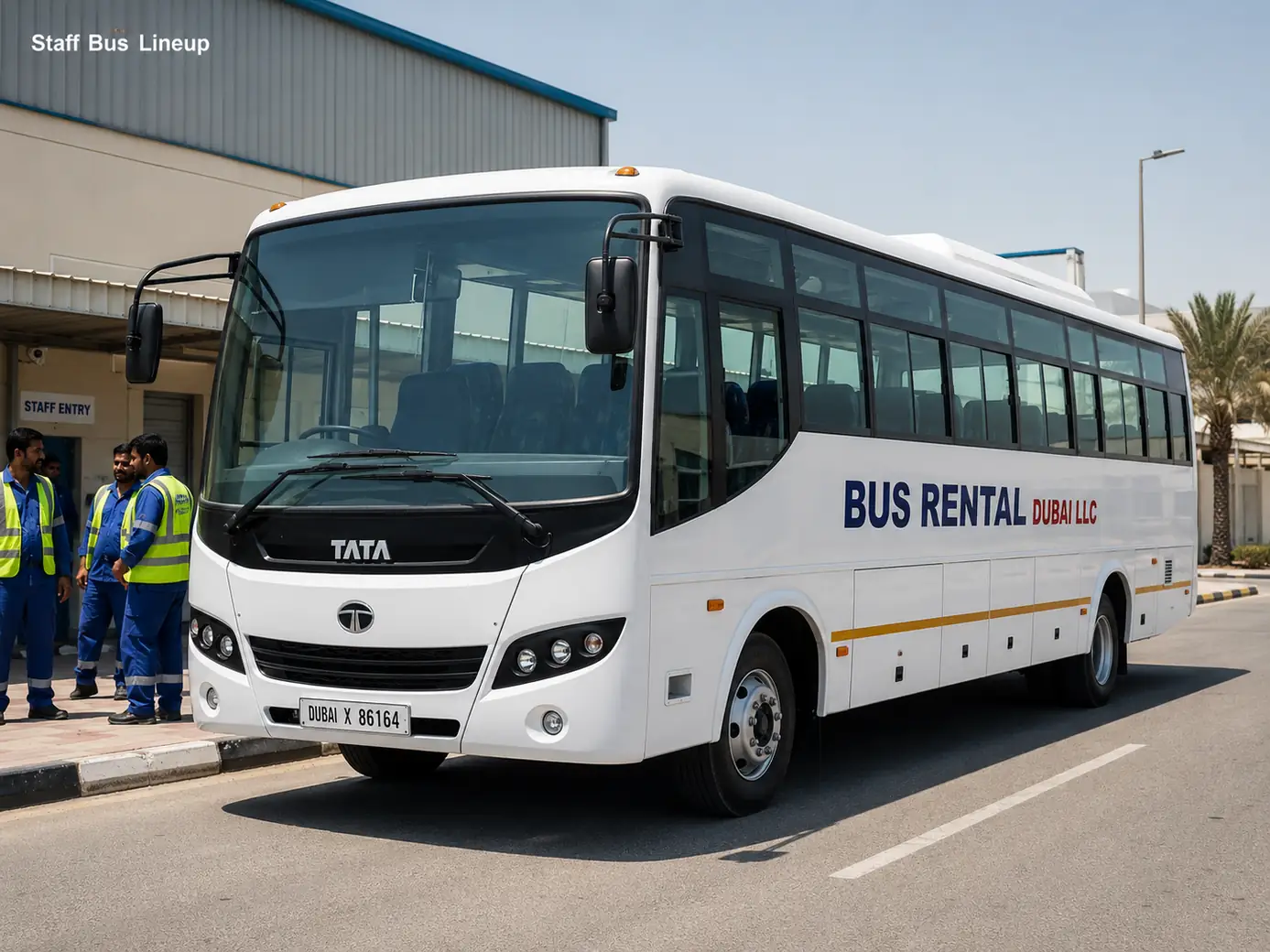
This staff-route design is intended for HR teams, administrators, facility managers and operations supervisors. The staff-route design separates confirmed operating facts from preferences that can remain flexible until availability is checked.
A useful staff-route design should be concise enough for dispatch and complete enough for approval. The staff-route design must identify the constraint most likely to change the vehicle, route or price.
When the staff-route design contains several movements, list them chronologically. Within the staff-route design, transfer, waiting, return, shuttle and recurring work are different commitments even when the passenger group is unchanged.
A headline request behind the staff-route design can hide several duties. The examples below show how the staff-route design develops into separate operating plans.
A long pickup chain can make the first passengers travel excessively; grouping nearby stops may improve punctuality.
Morning, afternoon and late-night movements need separate passenger counts and return times.
Site access and security can add time even when road traffic is light.
A review period during the first weeks helps the vehicle category and stop order settle around real attendance.
The staff-route design becomes clearer when alternatives are tested on one written basis. Keep these staff-route design factors visible during approval.
| Option or factor | Best use or question | Planning implication |
|---|---|---|
| Passengers | Named list by shift and pickup point | Controls capacity and missed-boardings |
| Stops | Exact map pins and boarding sides | Reduces driver searching and unsafe roadside changes |
| Timing | Report, depart and required site arrival | Creates a measurable punctuality standard |
| Changes | Authorised contact and written revision | Prevents passengers from altering the route informally |
Most avoidable problems in the staff-route design appear before dispatch. In the staff-route design, these errors can cause a wrong allocation, a revised price or a travel-day delay.
The staff-route design needs one controlled operating version that supervisors, drivers and administrators can all follow. For this staff-route design, confirm the following items before route activation.
The case below connects the staff-route design with passenger needs, access, timing and commercial scope.
A company needs 32 employees collected from three accommodation clusters for a 07:00 site start. The route should include a boarding deadline at each cluster, a target gate-arrival time and one supervisor who confirms attendance before departure.
Why it works: For the staff-route design, this example states the passenger movement, the main constraint and the service format before asking for a final vehicle or price.
These next steps turn the staff-route design into an approved transport requirement.
The questions below focus on decisions and objections that commonly arise during the staff-route design.
Send pickup points, reporting time, shift timing, passenger count, working days, return movement, billing contact and one route coordinator.
Set reporting time before departure time, control passenger updates through one coordinator and review pickup order after the first service days.
Review the route if the same pickup point is always late, passenger count changes, the vehicle is too small or overtime changes return timing.
Yes. Monthly planning works best when working days, shift pattern, passenger count and route order are stable enough for contract pricing.
One assigned coordinator should manage updates. Multiple passenger calls can confuse the driver and delay the route.
HR or admin should confirm passenger list, pickup order, timings, route purpose, company contact and any attendance control method.
Yes. Extra distance, long loops, waiting and inefficient pickup sequence can increase vehicle time and operating cost.
Check punctuality, passenger boarding, vehicle fit, route order, communication and any extra stops not included in the original quote.
Send the staff list, stops, shift times, working days, site gate and change authority. These details allow a recurring route to be designed and quoted on a stable basis.